

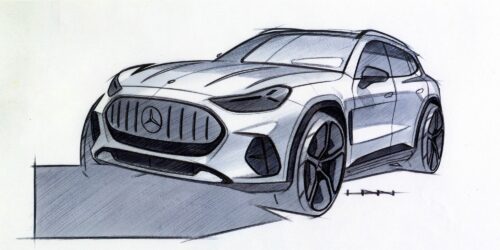
A low, sweeping roofline, broad shoulders and an upright front end define the new Mercedes-AMG GT SUV. With the all-electric model, the performance brand from Affalterbach unveils its first SUV developed from the ground up as a standalone AMG model. The car celebrated its world premiere on October 17 in Stuttgart as part of the »The 140 Festival«, with which Mercedes-Benz marked its 140th anniversary.
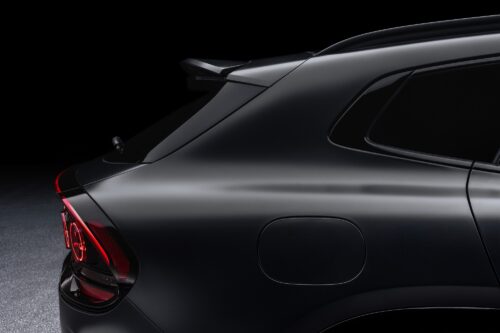
The Mercedes-AMG GT SUV is based on the new electric performance architecture AMG.EA and transfers the proportions of a sporty grand tourer to a five-door vehicle. At around 5.08 m in length and about 1.66 m in height, it results in an unusually low silhouette for this vehicle class. The roofline drawn far to the rear, frameless side windows, and short overhangs reinforce its striking presence.
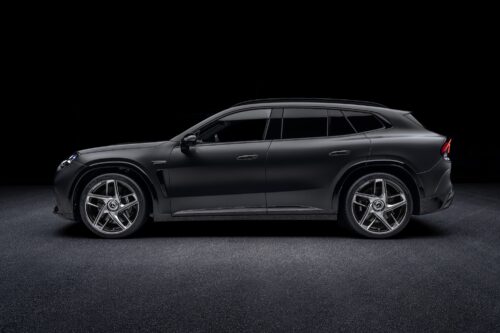
»Performance begins with presence«, explains Bastian Baudy, who has been the new Chief Design Officer of Mercedes-Benz Group AG since the beginning of the year. For him, it is above all the powerfully sculpted shoulders, the wide track, and the low silhouette that are decisive in making the vehicle’s sporty character legible in its exterior appearance.
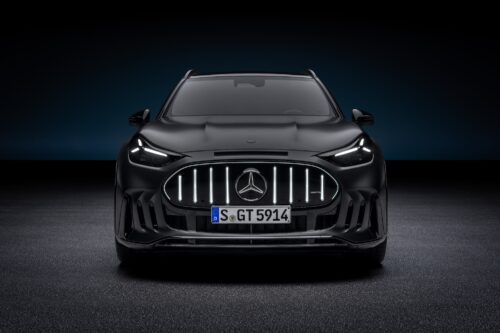
A new interpretation of AMG’s design language
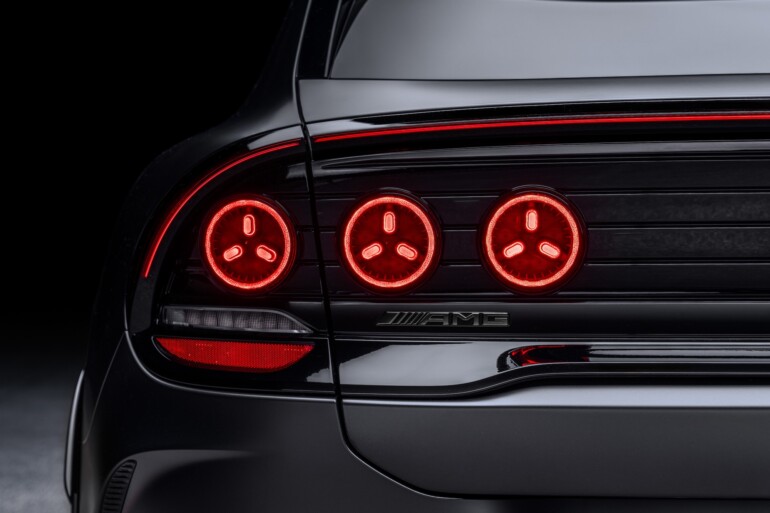
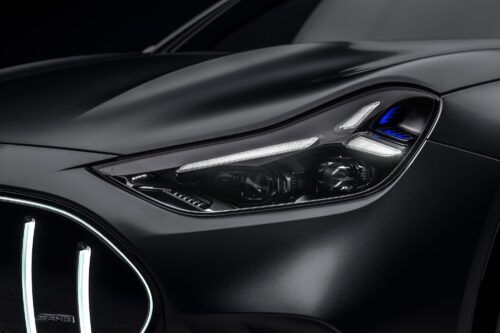
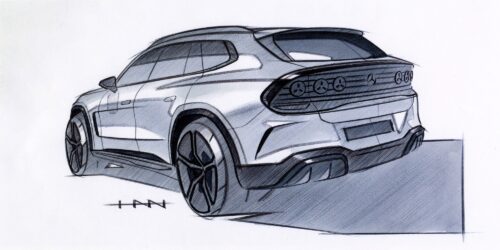
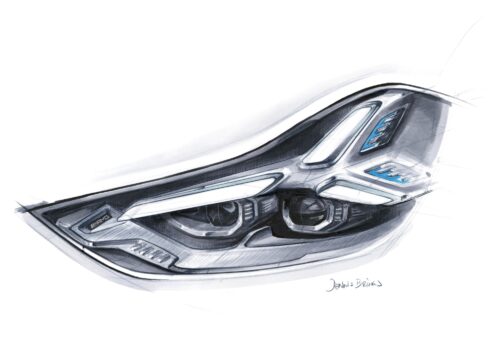
With its vertical struts, the front picks up a familiar Mercedes-AMG design feature. And even on this electric car, the traditional radiator grille graphic apparently cannot be omitted — even if its original function has long since receded into the background. On the GT SUV, the surrounding frame and the metallic struts can also be illuminated as an option. The headlights carry the Mercedes star motif, while at the rear six circular lights are arranged with a turbine-like structure.
Aerodynamics, of course, also shaped the design. Movable slats in the front apron regulate the cooling airflow and remain closed as long as no additional cooling is required. On the GT 55 and GT 63 models, an active roof spoiler changes its position from 150 km/h to optimize drag and driving stability, respectively.
A cockpit with GT character
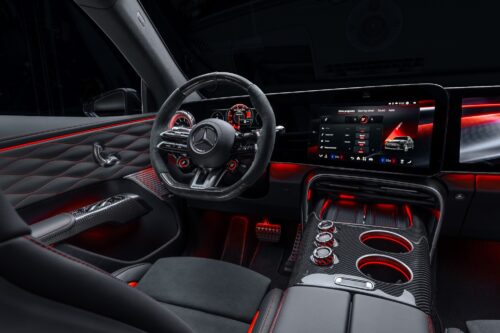
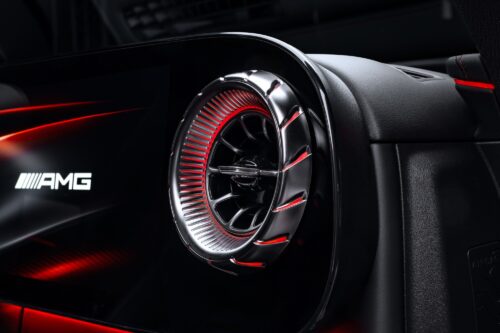
Inside, the Mercedes-AMG GT SUV follows the seating position of a grand tourer. Driver and front passenger sit comparatively low; the cockpit is clearly oriented toward the driver. Three displays define the instrument panel, with the 14-inch central screen slightly angled toward the driver. On the more powerful model variants, three rotary controllers on the center console allow individual tuning of driving dynamics—a decidedly welcome analog addition to an otherwise largely digital interface.
In the rear, the GT SUV offers a standard three-seat bench. The large panoramic glass roof can be switched between transparent and opaque. For personalization, more than 60 MANUFAKTUR paint finishes are available. For the first time, the forged wheels can also be specified with colored accents.
Electric performance from Affalterbach
After the AMG GT 4-Door Coupé, the Mercedes-AMG GT SUV is the second model based on the AMG.EA architecture developed specifically for electric high-performance vehicles. The battery, integrated flat into the vehicle floor, enables a low center of gravity while also creating the conditions for the comparatively low roofline. In this way, the electric architecture directly influences the vehicle’s proportions.
Depending on the version, two or three electric motors are used. The flagship GT 63 delivers up to 860 kW (1,169 hp), with which Mercedes-AMG continues the performance claim of its GT family into the electric SUV segment.
Acoustically, too, the GT SUV follows the electric AMG GT 4-Door Coupé presented back in May. In the AMGFORCE Sport+ drive program, recorded engine sounds are used to simulate the sound of an AMG V8 or a six-cylinder, as well as gearshift events. That Mercedes-AMG clings to the familiar combustion sound even in its in-house-developed electric vehicles shows how strongly the brand’s identity remains tied to the classic engine.
World premiere for the 140th anniversary
The setting for the presentation was the »The 140 Festival« at the Mercedes-Benz Museum in Stuttgart. The occasion was the return of three S-Class sedans that, since the end of January, had been traveling the world under the names Bertha, Carl, and Gottlieb. After more than 65,000 km through 55 countries on six continents, they reached their starting point again. A convoy of 140 historic and current Mercedes-Benz vehicles accompanied the return. The exhibits included a replica of the 1886 Benz Patent Motorwagen, the Mercedes-Benz 300 SLR Uhlenhaut Coupé, and the experimental C 111.

The world premiere of the Mercedes-AMG GT SUV e stablished the link to the brand’s present and future. In the year before Mercedes-AMG’s 60th anniversary, the model shows how the brand intends to carry its identity—previously shaped by the combustion engine—into the electric age. In design terms, the proximity to the classic grand tourer remains legible, even if its proportions have here been transferred, for the first time, to an independently developed AMG SUV. [CPS]