

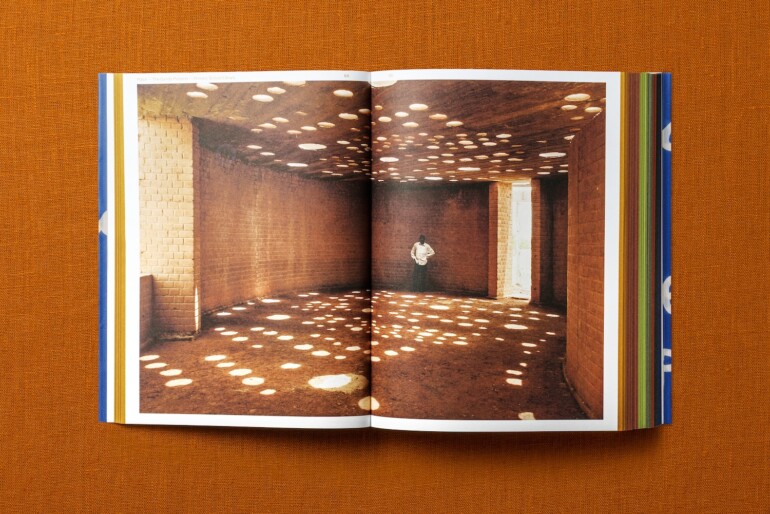
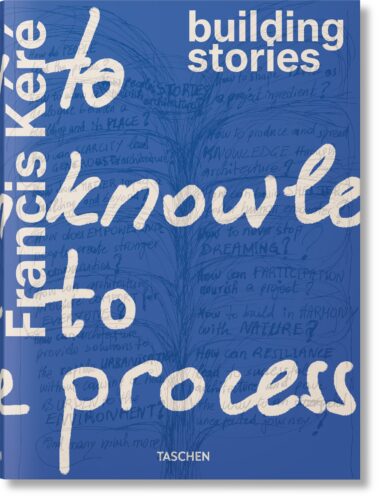
For Francis Kéré, architecture emerges from situations, from stories, from places that already exist and want to be understood. In Francis Kéré. Building Stories , published by TASCHEN, he largely describes this approach himself. The volume, which brings together 26 projects and is accompanied by a large selection of unpublished sketches, photographs, drawings, and supplementary texts, illustrates an understanding of architecture that extends far beyond the boundaries of a single discipline: as a process of learning and living, into which far more perspectives flow than just those of the architect.
The special attention Francis Kéré dedicates to a place is not a theoretical approach, but is rooted in his own history. Born in 1965, the architect, who was awarded the Pritzker Architecture Prize in 2022, grew up in Gando, a village in Burkina Faso in West Africa, and describes this origin as an influence that still shapes his perspective today. For him, landscape, climate, community, and rituals form the real prerequisites for building. When he writes that a place consists »mainly of people«, it is not a casual remark, but a key to his work. From this, it becomes understandable why his architecture always considers the relationships that a place already holds within itself.
On Tuesday, June 9, at 6 p.m., the book will be presented and signed exclusively by Francis Kéré at
the TASCHEN Store in Berlin, Schlüterstraße 39, 10629 Berlin.
RSVP HERE
When Kéré developed his first school building for Gando in the late 1990s, this biographical origin became a central element of his thinking. The project evokes memories of his own childhood, of lessons in cramped, overheated rooms, and connects them with his return to his village, where the existing school already showed cracks and structural failure. This experience sparked the desire to create a space that offers light, air, and protection, and at the same time arises from what is available locally. Kéré precisely describes how, through engagement with rainy seasons, material availability, artisanal knowledge, and social processes, a design emerges that cannot be reduced to a formal gesture. The building in Gando is thus far more than an early project. It already very concretely shows what his work will revolve around for the next 25 years.
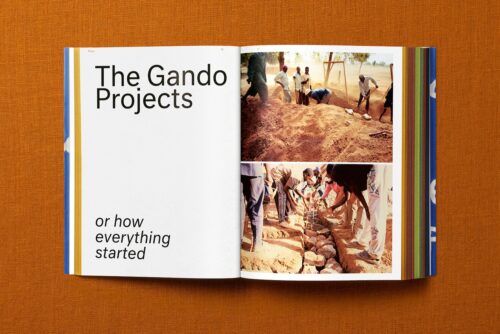
It is therefore very fitting that Kéré does not present himself as a detached author of his buildings, but as someone who experiments, corrects, and continues to work. »My only concern is that my work must have a positive impact on the communities in which it is embedded«, he writes in the foreword. Shortly thereafter, he condenses this claim into a sentence as simple as it is concise: »For whom do we do all this? For human beings. It is all about people.« This very thought gives weight to the personal passages of his life. Kéré writes about uncertainties, about resistance in the village, about the arduous path of financing, and about the patience needed for trust to grow, thus making it clear how closely his work is actually linked to personal commitment.
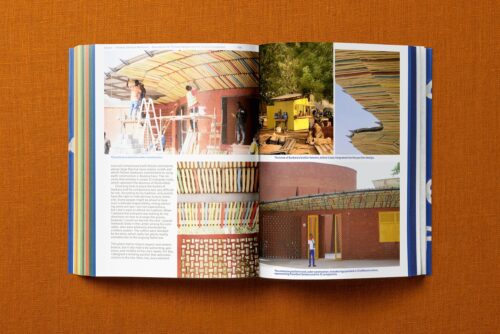
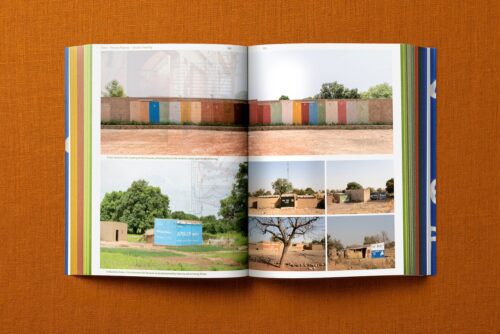
Francis Kéré. Building Stories thus reads as the testimony of an architect who understands building as a service to a community. This becomes particularly clear in the chapter on the Naaba Belem Goumma Secondary School. Kéré describes the years from 2011, during which his work between Berlin, teaching, international projects, and responsibility for Gando became increasingly demanding. At the same time, he recounts the death of his father, who had been the first to send him to school. After his father’s death, Kéré was expected to take on the role of village chief. He decided against it and held on to architecture as his way of taking responsibility.
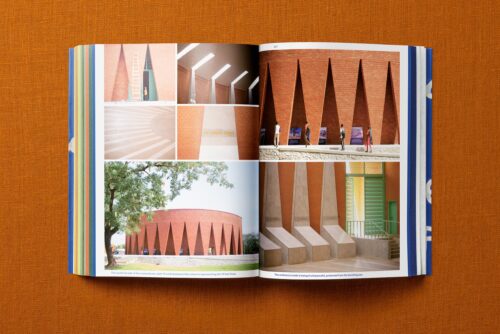
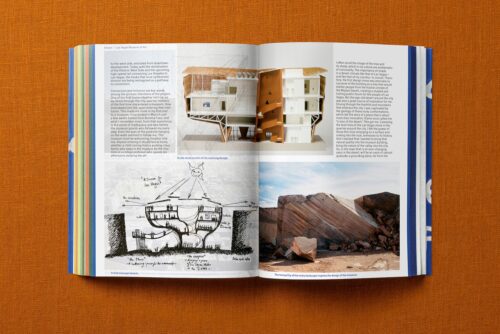
This standard is maintained even when Kéré writes about international projects. For the Serpentine Pavilion in London, to name just one example, he designed an open space that welcomes people, offers protection from the weather, and at the same time reminds us of fundamental needs. Kéré explicitly describes the pavilion, which collects rainwater, creates shade, and shapes space, as a place of encounter that is only completed by the people who gather beneath it. Spaces should provide shelter, accommodate movement, and enable communal life.
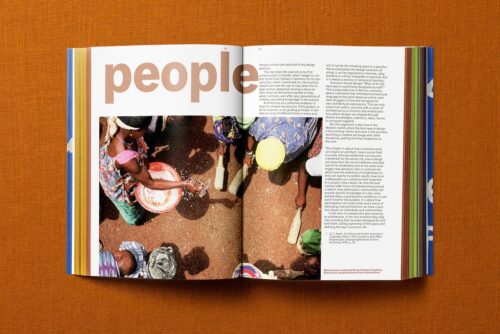
As personal and intimate as Kéré’s own words carry the 444-page volume, a philosophical classification from outside naturally complements this very direct perspective. In the essay »the existential task of architecture«, Juhani Pallasmaa reads Kéré’s buildings as an architecture that remains tied to lived experience, perception, and human reality, and in this context also cites Wittgenstein’s sentence that architecture »immortalizes and glorifies something«. Kéré himself summarizes his story much more directly and accessibly, without elaborate theory: »My story begins in a village in sub-Saharan Africa and reaches a thousand places.«
With Francis Kéré. Building Stories , published by TASCHEN, Kéré himself formulates a way of thinking that orders everyday life, creates dignity, preserves knowledge, opens up encounters, and gives spatial form to the communal – thereby showing that good architecture, like good reading, begins where people find themselves within it. [Ed.]
Francis Kéré
Softcover, 19 x 25.5 cm, 1.09 kg, 444 pages
taschen.com