

For two reimagined Porsche 911 generation 964 models, the Californian specialist Singer contributes its experience in automotive design , while the French luxury brand Louis Vuitton brings its expertise in leather, fashion, and watchmaking. Since their premiere during Monterey Car Week 2026, this unusual collaboration has sparked extensive discussion within the Porsche and Singer communities. The question behind the project is an intriguing one: how far can a design as formally defined as the Porsche 911 be transformed by a second, equally strong design identity? The result is two cars that offer very different answers: a Classic Coupé in a color scheme derived from the Louis Vuitton archives, and a Classic Turbo Cabriolet created under the creative direction of Nicolas Ghesquière.
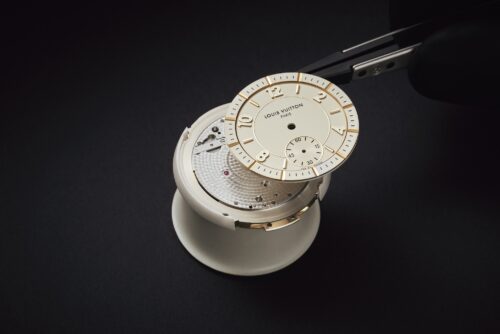
The starting point of the collaboration was surprisingly unassuming. Originally, Singer asked Louis Vuitton to develop a dashboard clock for a Porsche 911. However, this evolved into a significantly more extensive project. In addition to the mechanical timepiece, which is inspired by the Tambour collection and can be removed from the vehicle, the entire cockpit was redesigned over the course of more than a year. Even the instruments, displays, and controls incorporate design elements from the watchmaking collection.
The first vehicle, the Porsche 911 Reimagined by Singer — Classic, is presented in saffron, cobalt blue, and yellow. The color combination references historical design elements from the Louis Vuitton archives. The appearance is complemented by a bespoke roof rack that offers space for luggage, skis, or a surfboard, placing the brand’s philosophy of travel at the center.
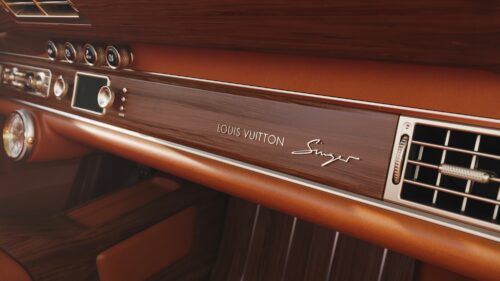
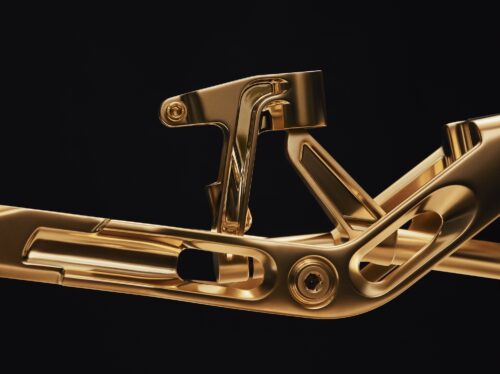
Inside the cabin, there are numerous references to the Maison’s savoir-faire. Leather inspired by Louis Vuitton’s characteristic VVN leather, Monogram flowers on the seats and headrests, and the Malletage pattern known from trunk-making run throughout the entire vehicle. Many components that are usually made of plastic in modern automobiles have been replaced by handcrafted components made of metal and high-quality natural materials.
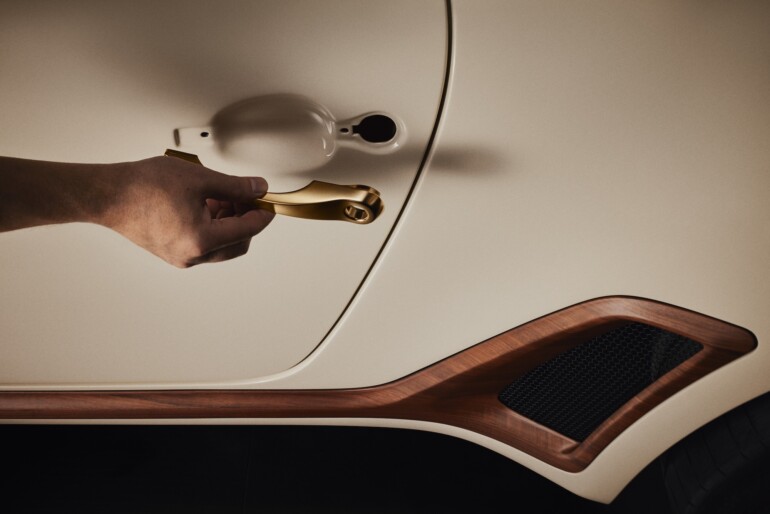
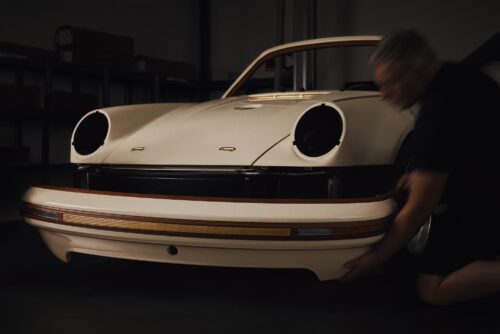
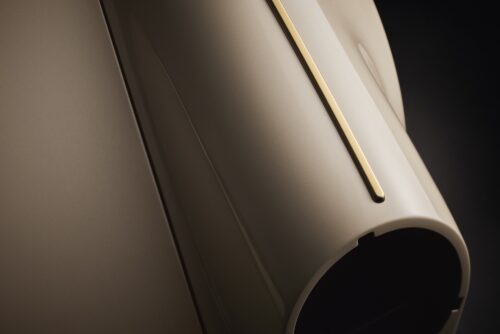
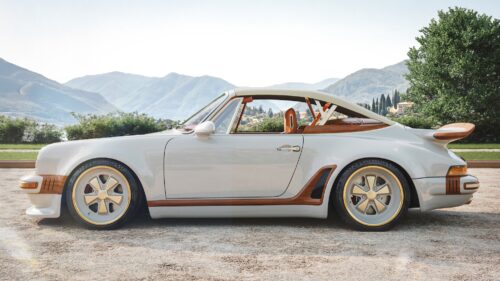
Following the completion of the Coupé, the collaboration was expanded to include a second 911. The Classic Turbo Cabriolet bears the signature of Nicolas Ghesquière, Artistic Director of Women’s Collections at Louis Vuitton. Painted in Calcaire-Lutétien white and refined with gold accents and numerous wood elements, the vehicle’s design is oriented toward classic motorboats. Wood details are found not only in the interior but also in the luggage and bodywork elements.
Both vehicles are also accompanied by specially developed capsule collections. For the Classic, this includes a leather racing jacket, driving gloves, a helmet, sneakers, and bespoke luggage pieces. The Cabriolet is accompanied by a separate collection featuring a Tambour Automatic, a custom-made silk suit, and various bags and accessories. Many of the luggage pieces were developed specifically for the respective trunks.
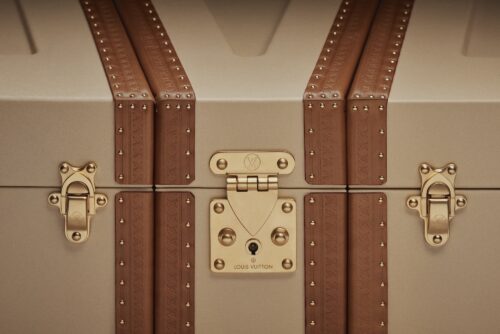
The connection between Louis Vuitton and the automobile goes back a long way. As early as the end of the 19th century, the Maison developed special travel trunks for vehicles. In 1909, the Vuitton grandsons Pierre and Jean Vuitton even designed their own automobile based on a Stabilia sports chassis. The cooperation with Singer thus connects to a long, now largely forgotten automotive history of the brand.
Technically, both one-off pieces are based on Porsche 911 generation 964 models, which Singer has extensively restored and rebuilt. The bodies are made of carbon fiber. The Classic features a naturally aspirated 4.0-liter six-cylinder boxer engine with a six-speed manual transmission, while the Classic Turbo uses a 3.8-liter twin-turbo boxer engine, also with a six-speed manual transmission. Both vehicles are fully drivable unique pieces and not mere design studies.
With these two Porsche 911 models, Louis Vuitton and Singer merge their respective competencies and push individualization far beyond classic restomod logic. This is precisely where the appeal of the cooperation lies—and the reason for the frequently perceived criticism. Where some see extraordinary craftsmanship and aesthetics, the staging appears overloaded to others and too strongly dominated by Louis Vuitton’s brand world. In the end, it remains a question of taste, but an interesting one: How much additional identity can a design like the Porsche 911 handle before its own fades too far into the background?