

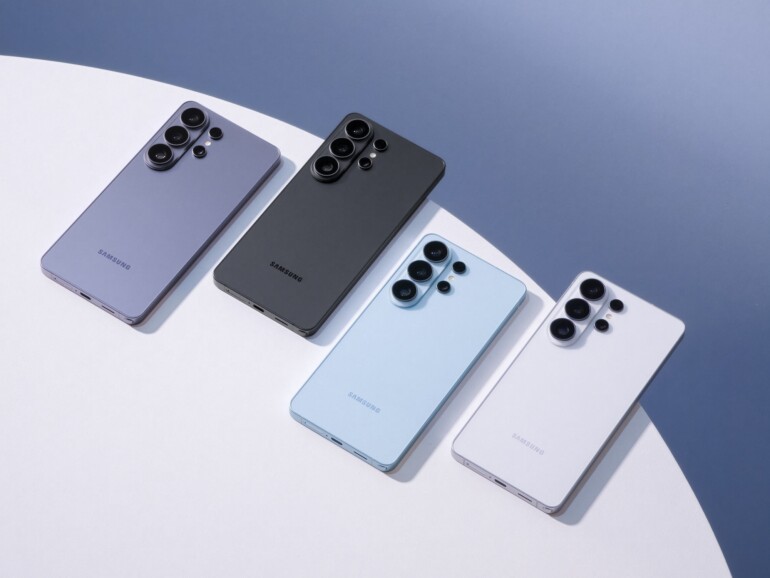
With the Galaxy S26 Series unveiled yesterday, on February 25, 2026, Samsung once again positions its premium smartphones as the technological cutting edge. Yet beyond the performance specs and AI promises, the real focus lies in an area that has long been neglected: the design of privacy.
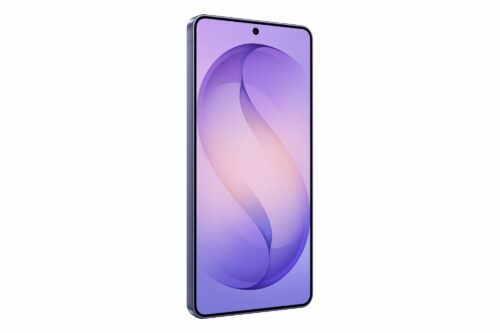
Formally, the new Galaxy S26 Series—the Galaxy S26 Ultra, the Galaxy S26+, and the Galaxy S26—appears largely unchanged at first; the key innovations primarily concern internal system logic, performance, and above all, innovative display features. And here Samsung places privacy at the center, particularly the question of how sensitive content can be displayed in a controlled manner even in public situations.
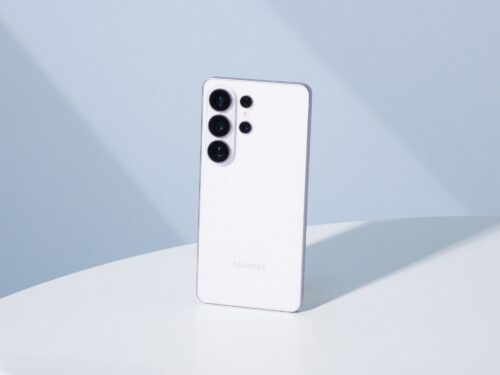
The answer to this is the so-called »Privacy Display«, integrated for the first time in the Galaxy S26 Ultra and the industry’s first of its kind. According to Samsung, a »breakthrough in display technology« where design, hardware, and software work together to protect user privacy. Intelligent control of pixel light diffusion ensures that display content is not visible from side angles beyond 45 degrees. Unlike stick-on films already available, this function is deeply embedded in the display architecture and can be activated situationally—for example, during PIN entry or when opening sensitive applications. Samsung addresses an enormously relevant question: How do you design digital privacy in a public world—especially in light of the rapidly increasing integration of highly personal information into digital systems.
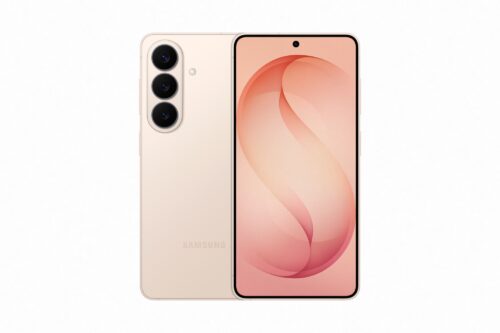
Beyond the »Privacy Display«, the evolution of Samsung’s third-generation Galaxy S smartphones also concerns the internal structure of the devices. Samsung uses a newly tuned processor with significantly increased system performance, revised heat dissipation, and 60-watt fast charging on the Galaxy S26 Ultra. The camera unit has also been equipped with larger apertures and an updated image signal processor that now includes the front camera. The goal is higher computing power with stable energy efficiency.
On the software level, Samsung introduces context-based assistance functions with »Now Brief« and »Now Nudge« that prioritize content before it is actively searched for, such as appointments or travel information. These systems access context-related usage data and are designed to simplify workflows without requiring additional interaction. This shifts the focus of the Galaxy S26 Series from pure performance enhancement to a structural question: designing the relationship between technology and users.
In this context, a personnel decision also takes on special significance. Last year, Samsung Electronics created the position of »President and Chief Design Officer« for the first time in its corporate history and filled it with renowned designer Mauro Porcini (pictured below). Porcini comes from 3M and PepsiCo, where in similar positions he established design as a strong and diverse business discipline.

Very much in the spirit of the subtle innovations of the Galaxy S26 Series, design for Porcini does not begin with the external form of a product, but with the question of what role technology should play in people’s lives: »As designers, our mission goes beyond creating innovative products. We aim to elevate people’s lives—to design tools and experiences that help them live better, longer and more meaningfully, by taming technology in service of humanity,« he explains.
Whether Mauro Porcini’s appointment will lead to striking shifts in product design in the future remains to be seen. While the new Galaxy S26 Series appears to be a consolidation in this regard for now, the institutional elevation of design suggests that Samsung will likely define its technological leadership more strongly through formal design going forward. [TS]