

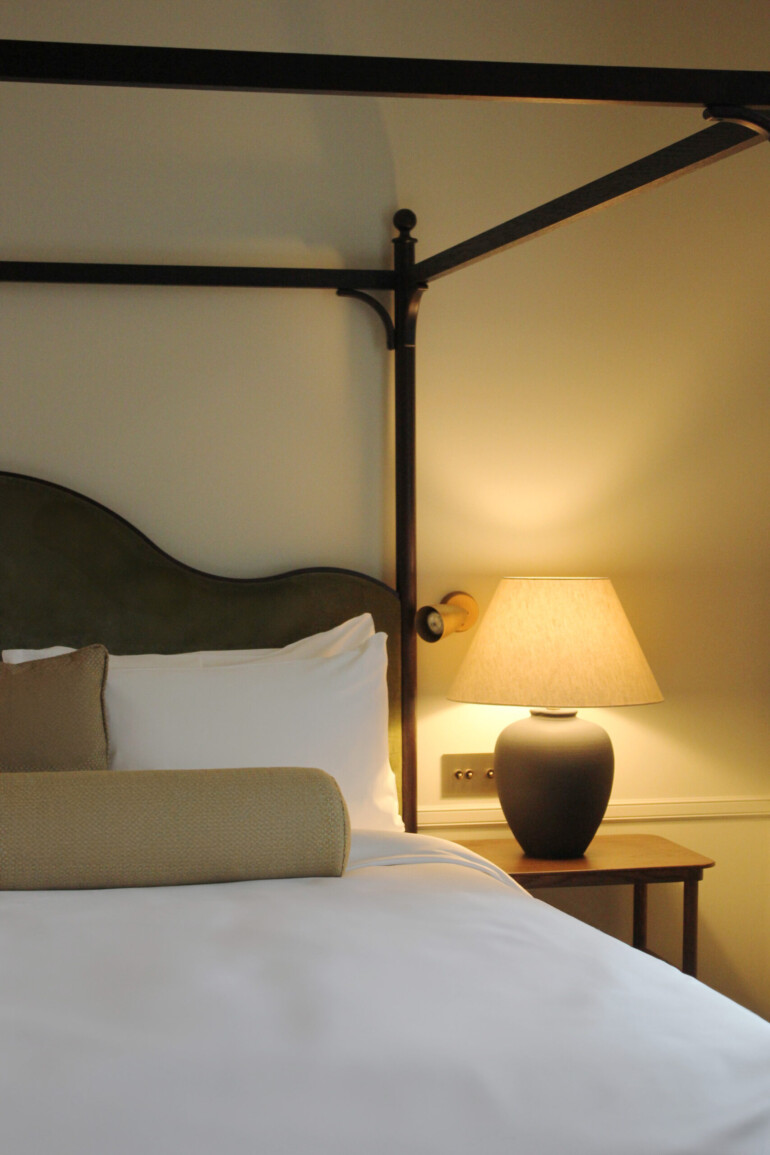
In just two years, Miiro has opened six hotels and positioned itself as one of Europe’s most notable young hotel groups. Based in London, the brand develops each property from its immediate surroundings—drawing on architecture, history, and the everyday life of the neighborhood. The guiding idea »Brilliantly Considered Stays« captures this ambition succinctly and perfectly.
This approach is especially easy to see in Vienna. With Palais Rudolf on Rudolfsplatz and SpittelBerg on Kirchberggasse, Miiro operates two properties that look at the same city from different perspectives.
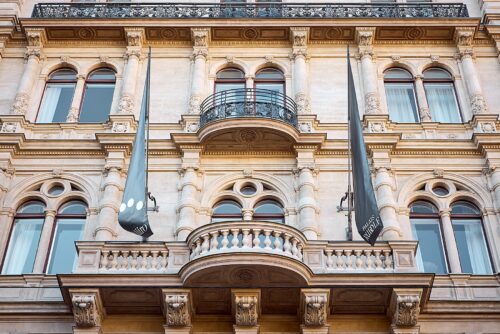
Miiro Palais Rudolf
Miiro’s Palais Rudolf in the 1st district is a contemporary take on a Viennese townhouse. 64 rooms, herringbone parquet, vintage furnishings, and a calm color palette define the property. The interior concept is by James Thurstan Waterworth, with architectural design by Gabriel Kacerovsky and his Vienna studio Archisphere. The design works with a restrained material palette, warm natural tones, and furniture that gives the house a classic feel without seeming historicist. Kacerovsky describes the approach like this: »Palais Rudolf was conceived as a living place, not a monument.« Art by Maria Lassnig, Peter Sengl, Jürgen Messensee, Max Weiler, Rudolf Hradil, and Christian Ludwig Attersee reinforces this idea. The property is also set to be expanded with its own standalone dining destination: the Baroness restaurant, planned for 2026.
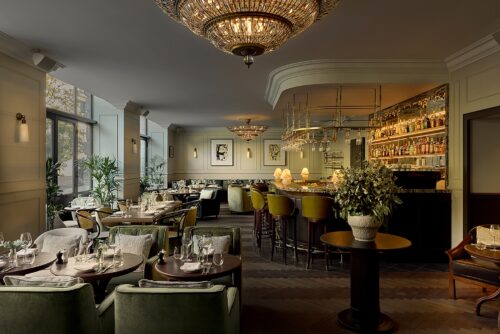
Baronesse Restaurant, Miiro Palais Rudolf Vienna
The Miiro SpittelBerg in Vienna’s 7th district strikes a different tone. With 132 rooms, it sits in the heart of historic Spittelberg and sees itself as part of a neighborhood shaped by small venues, galleries, and cultural institutions. Stone, oiled oak, lime plaster, and textile surfaces define the interiors. Custom-made lighting pieces add carefully placed accents. The property feels less townhouse-like than Palais Rudolf—it’s more open, more urban, and more strongly geared toward transitions between the hotel and its creative surroundings. Here, too, art plays a central role: works by Christian Ludwig Attersee, Josef Mikl, Heimo Zobernig, and Cornelius Kolig meet a site-specific intervention by Florian Metzler, aka @flowsofly, in the entrance area. Gabriel Kacerovsky sums up the idea behind the property like this: »The house was conceived as part of Spittelberg—with a clear structure, open transitions, and an understanding of hospitality that brings architecture, neighborhood, and culture together.«
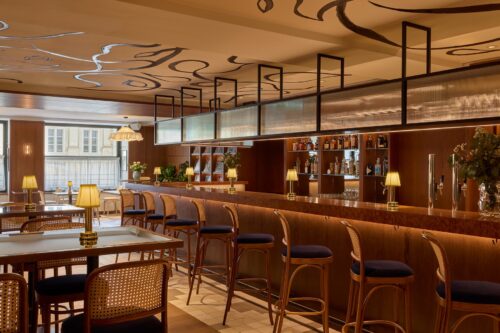
poco bar, Miiro Spittelberg
On the ground floor, the poco restaurant extends this idea into the public realm. It’s aimed equally at hotel guests and local residents, echoing the neighborhood’s openness. In design terms, poco also avoids a classic hotel layout. The space is meant to feel approachable, with a food and drink concept that fits into Spittelberg’s daily rhythm.
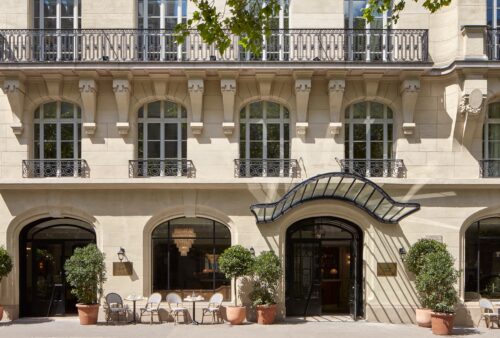
Miiro Le Grand Hôtel Cayré
A look at the hotel group’s other properties shows that Miiro consistently pursues this place-based approach in other regions as well. In Paris, Le Grand Hôtel Cayré draws on the history of Saint-Germain-des-Prés. In Barcelona, Borneta combines the atmosphere of the El Born neighborhood with a local art program and a lively public area. The Mansard in Gstaad picks up on Alpine building traditions, while Templeton Garden in London develops its character from an expansive garden in the heart of Earl’s Court.
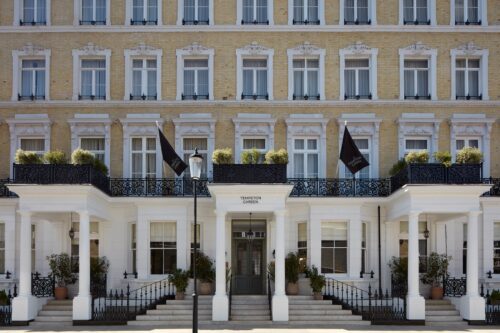
Miiro Templeton Garden, London
»Our goal is to create properties that are connected to their surroundings and offer guests a stay that makes the character of each place tangible«, explains Neena Gupta, CEO of Miiro. The fact that this deliberately local-minded hotel brand is backed by InterGlobe Enterprises, one of India’s largest tourism and aviation groups, makes the approach all the more interesting.
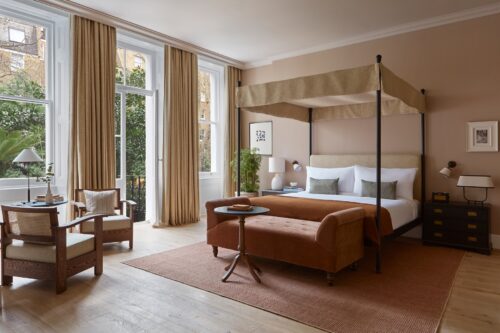
Garden Suite, Miiro Templeton Garden
One of the constants of the Miiro concept is the deliberate use of details: these include, for example, Le Labo toiletries, which create a subtle, recognizable scent across all properties. This is complemented by local products in the minibar, coffee and tea stations, and so-called Refresh Rooms for the time before check-in or after check-out. Music is also part of the overall concept: together with Spectre, Miiro develops bespoke soundscapes for each property that shift throughout the day and make the character of each house audible. [TVR]