

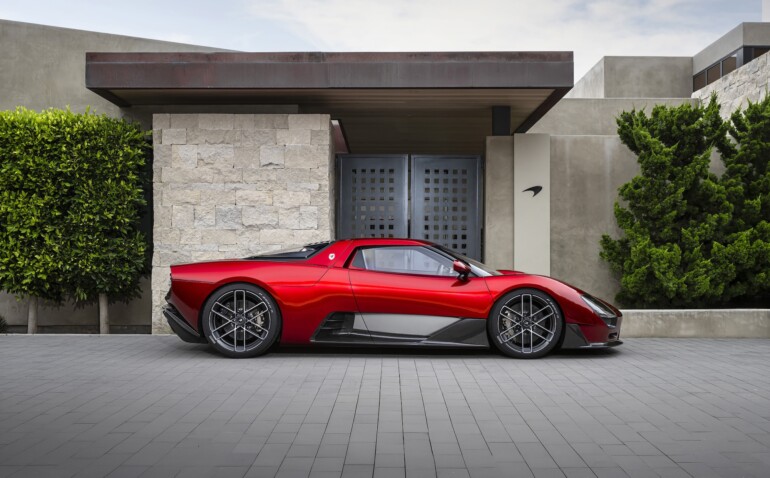
1969 versuchte Bruce McLaren mit dem M6GT, aus einem Rennwagen die Grundlage für einen eigenen Straßensportwagen zu entwickeln. Das Projekt blieb unvollendet. Auf der Monterey Car Week 2026 steht nun der McL 6GT: extrem niedrig, breit, mit weitgehend ungebrochenen Flächen und einem Cockpit, in dem ein manueller Schalthebel wieder eine zentrale Rolle spielt. McLaren übersetzt damit einen Entwurf aus den Anfängen seiner Straßenwagenhistorie in die Gegenwart und stellt ihn in den Kontext einer umfassenderen Neuorientierung der Marke. Nach Monaten strategischer Umstrukturierung zeichnet sich nun auch gestalterisch eine neue Phase ab: Seit diesem Frühjahr verantwortet Kemal Curić als Chief Design Officer die künftige Ausrichtung. Chapter traf ihn in Monterey zum Gespräch über die Entstehung des McL 6GT und die Zukunft des McLaren-Designs.
Dass McLaren ausgerechnet jetzt so deutlich in die eigene Geschichte blickt, ist bemerkenswert. Der McL 6GT ist dabei jedoch keinesfalls als reines Retro-Modell zu verstehen. Vielmehr sind es historische Designdetails, die er zitiert, aus denen sich aber gleichzeitig zukünftige Design-Perspektiven ableiten lassen können: niedrige Proportionen, klare Volumen und eine möglichst unmittelbare Verbindung zwischen Mensch und Maschine. Der McL 6GT beantwortet damit weniger die Frage, wie künftige McLaren konkret aussehen werden, als jene, welche gestalterischen Prinzipien Curić künftig beschäftigen: Reduktion, klare Proportionen und eine unmittelbare Verbindung zwischen Fahrer und Fahrzeug.
Um McLaren war es in den vergangenen Monaten ungewöhnlich still geworden. Seit der Übernahme durch CYVN Holdings und der Zusammenführung mit dem britischen Elektroauto-Unternehmen Forseven wird das Unternehmen neu geordnet. Angekündigt ist unter anderem ein erweitertes Modellprogramm, über dessen konkrete Gestalt bislang allerdings wenig bekannt ist. Auch im Design beginnt eine völlig neue Phase. Seit dem Frühjahr führt Kemal Curić als Chief Design Officer das Designteam und verantwortet damit die gestalterische Richtung des künftigen Portfolios. Nach leitenden Designpositionen bei Lincoln und Ford Performance wechselte er nun zu McLaren – übrigens auf Wunsch von CEO Nick Collins, mit dem er bereits vor rund 20 Jahren zusammengearbeitet hatte.
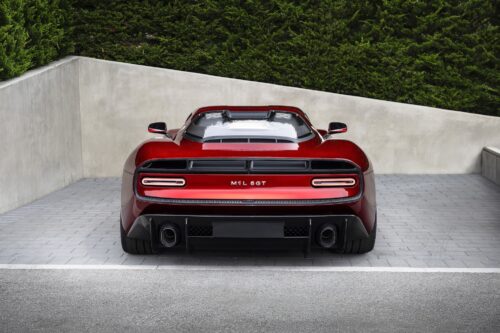
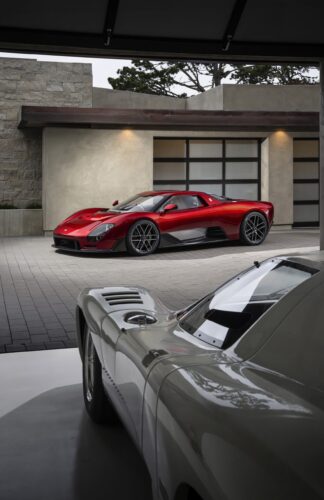
Auf der Monterey Car Week 2026 zeigt sich nun erstmals deutlicher, welche gestalterischen Themen Curić bei McLaren beschäftigen. Der hier präsentierte McL 6GT Concept ist ein klares Zeichen nach außen. Seine Idee wirkt auf den ersten Blick jedoch paradox: V8, Handschaltung und hydraulische Lenkung greifen bewusst auf eine analoge Form des Fahrens zurück, die im aktuellen Supersportwagenbau selten geworden ist. Gerade daraus entwickelt McLaren jedoch einen bemerkenswert eigenständigen, spannenden Entwurf: extrem flach, mit klaren, nahezu ungebrochenen Volumen, einer tief eingebetteten Kabine und einem Heck, das die Kammform des historischen M6GT aufnimmt, ohne in Retro-Design zu kippen. Auch die analoge Mechanik wirkt dabei nicht nostalgisch aufgesetzt, sondern ist eng mit Proportion, Ergonomie und Bedienung verzahnt. Dabei versteht sich das Concept nicht als formale Vorschau auf kommende Modelle. McLaren selbst bezeichnet es vielmehr als Signal für einen zukunftsgerichteten Ansatz.

Chapter traf Kemal Curić bei der Weltpremiere des McL 6GT zum Gespräch. Auch wenn die Idee für das Fahrzeug bereits vor seiner Ankunft bei McLaren entstand, auf Proportionen, Ausführung, Interieur und zahlreiche Details nahm er anschließend gemeinsam mit dem bestehenden Designteam Einfluss. Im Gespräch erklärt Curić, warum es beim Entwerfen oft schwieriger ist aufzuhören als anzufangen, weshalb trotz VR und Augmented Reality weiterhin am Clay-Modell gearbeitet wird und was Uhrmacherei mit der Gestaltung eines McLaren-Interieurs zu tun hat.
Chapter: You joined McLaren in the spring of this year. How much of the McL 6GT Concept was already settled when you arrived, and where was there still room to move?
Kemal Curić: I was involved in the design of the whole car. But there’s an excellent design team at McLaren, and they already had an idea of what they wanted to do. Then I came in with editing, curating, proportion, execution and the interior. I had a lot of influence on the interior—everything around the driver, the tactile side, the mechanicals, the patterns, even the headlamps. I also worked very closely with the engineers to keep the nose very low. Extremely low, in fact. The height sits at the legal limit. But as I said, the idea started before I arrived, and then we executed it together as a team.
Chapter: Every car has one design detail a team keeps returning to, long after the rest has been decided. Where was it on this one, and what was the discussion about?
Kemal Curić: Actually, the whole car. But the hardest part is knowing when to stop. A good design team always wants to add more ideas, because there is never a lack of them. So I have to work out: does it add any functionality? Can we keep it pure, keep it close to the original idea? I would say that’s always the hardest part.
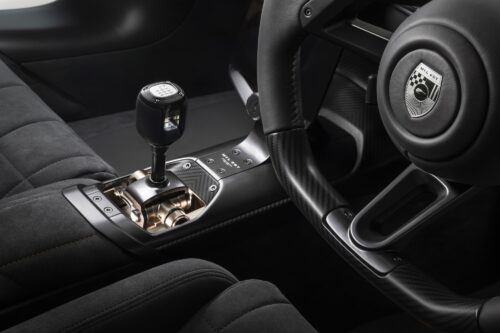
Chapter: Is there a design detail you expect almost no one to notice, but that matters particularly to you?
Kemal Curić: The analogue shifter—it’s a work of art. We went through so many iterations of it. Not just how it looks, but how it feels in your hand, and the craftsmanship behind it. In general, we were obsessed with the interior. Around the steering wheel, everything at your fingertips. We spent a great deal of time on things like that, so the car doesn’t just look great from the outside, but feels great on the inside as well. So that as a driver, you really feel engaged. And then there’s the use of VR and AR. Very, very useful, because you can try out a lot of iterations that way. How the air vents feel. How the digital connects with the analogue. In what order. Can I operate it directly when I’m driving at 150 mph? Things like that are very, very important.
Chapter: And yet there is still clay in your studio. What does clay show you that a VR headset cannot?
Kemal Curić: The touch and feel. It always starts with VR, then AR. You see the car in front of your eyes; you can walk around three or four versions of it. We have five or six headsets, and we all walk through the studio with no car there at all. Then we see it in augmented reality. That’s another level again. And then we decide: this is the car that goes into clay. Of course, you then find that it looks slightly different. It feels different. Especially with cars this emotional—and this is a very emotional car. It has to feel superb. In clay, you can see the tension in the surfaces. You can debate the rear haunch: five millimetres here, twenty millimetres there. Is there more muscle? Is the surface over-tensioned? Is that too much? We spend a lot of time on that in clay modelling, especially when you’re doing something this emotional.
Chapter: We’re standing here at the House of McLaren in Pebble Beach, in the middle of a Car Week that trades heavily in nostalgia and provenance. While most established sports car manufacturers now reinterpret their history through explicit retro or heritage models, McLaren has largely stayed out of it. What does a week like this mean for a brand that rarely quotes its own past?
Kemal Curić: Well, it’s great—for me, it’s always emotional to understand which cars still speak to people 50 or 60 years later. Usually, those are the simplest, boldest—I would say the purest—forms, the ones we admire. The goal for McLaren is to create something very timeless and pure. The cars you’re describing, the ones you can draw with two or three lines, the ones you and I and probably all of us admire: when you reduce them to their essentials, they are actually quite simple and pure. And I think that is the boldness. That’s where I see McLaren: being really bold, having fewer elements, but then executing them to perfection. We’re hoping that a car of this type becomes one of the cultural icons of its period 30 or 40 years from now.
Chapter: So, 30 or 40 years from now, at an event like this one, what would tell someone that a car came from the »Curić era« at McLaren? What would be the markers?
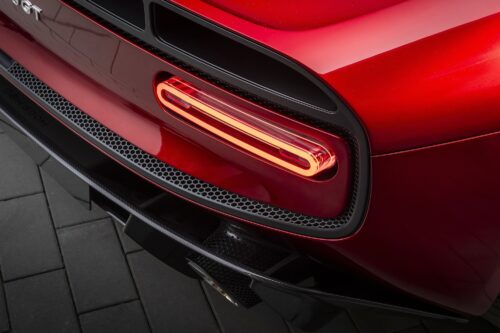
Kemal Curić: The marker for me would be clarity. The emotional aspect coming through. A purity of design that is very clear, intentional and has a timelessness to it. Not so much the graphics, because graphics can be repeated—I’m not talking about the headlamps and taillamps as such—those things are repeatable. It’s more about the ethos behind it. Everything is functional, everything is purposeful, everything has a reason. There are no empty calories, that’s the idea behind it. So I would say: the most emotional and most engaging vehicles. That would be my goal for McLaren.
Chapter: I read that you collect watches and that watchmaking interests you. What can a car designer take from a discipline that has to resolve mechanics and proportion within a few millimetres? And where do automotive design and watch design actually meet?
Kemal Curić: For me, watches are an inspiration for the interior. Really, all the gauges, the whole tactile feel. For me, it is always about showcasing the engineering, the beauty. It’s not just about telling the time; it’s about showing the beauty of it, which again comes down to how you execute it. Some beautiful watches expose the mechanics, beautifully faceted. There’s something really fascinating about watches for me. I’m not going to mention which ones in particular, but there are some I obviously admire. How they remain relevant over time—that for me is really inspirational. I’m obsessed with watchmaking, with the details, with the way light travels through some of these watches. Look at the watch you are wearing right now: when you turn it into the light, you can tell somebody thought about it. How is it going to feel at night, in daylight? It also says a lot about you, which watch you wear, and I think that has something to do with the car as well.

Chapter: You grew up in Sarajevo. Is there something from there—buildings, cars, everyday objects—that still influences the way you look at design?
Kemal Curić: Absolutely. The brutalist architecture I grew up with in the eighties, mixed with what the Ottoman Empire left behind. It’s a wonderful mix in that city, and it’s all right out in the open—something I haven’t found in Germany or in the US. There are so many facets to it. You turn around and see something very modern, and something that has stood for hundreds of years. It’s unbelievable, it’s a very vibrant city. I get goosebumps talking about it. I haven’t been there in a long time, I’m sorry to say. It marked me, and that imprint is still there. Even now. You always see the modern and the old. They coexist. That’s a very beautiful thing. [CPS]