

Interview Dzenana MUJADZIC
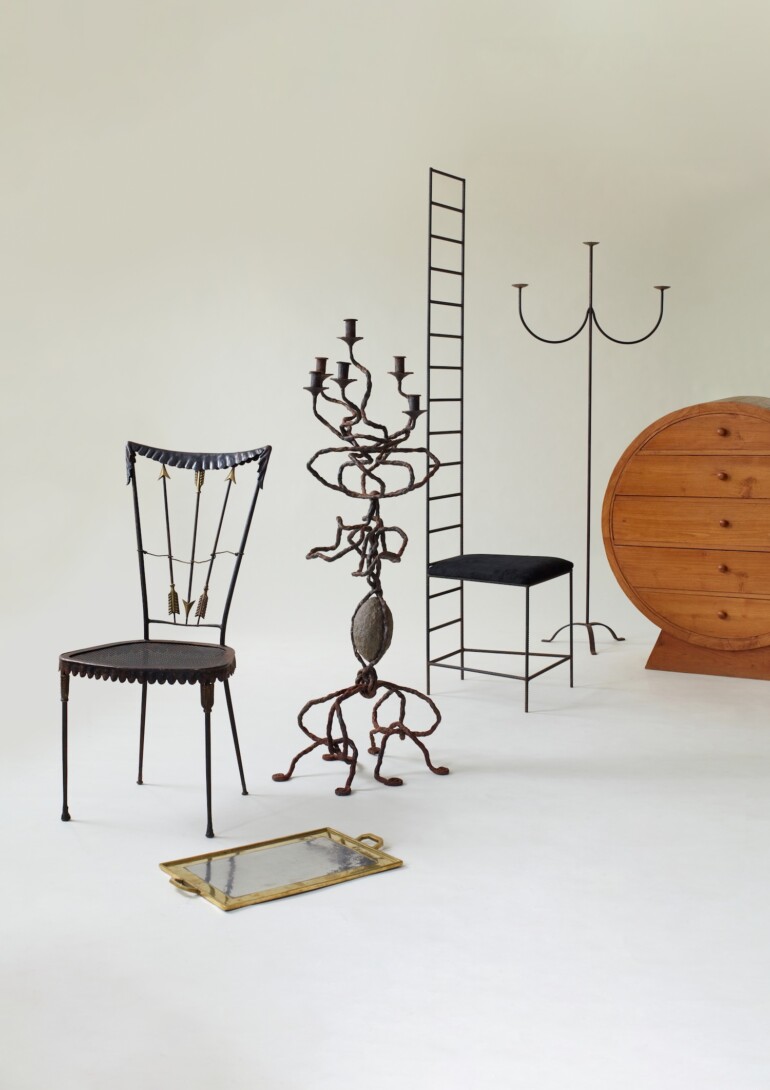
Mit seinem Projekt »Oculus« versammelt der in London lebende Set Designer und Designhändler Alfie di Trolio Stücke, in denen eigenwillige Formen dekorativer Kultur und seine persönliche Sammelleidenschaft zusammenfinden. Möbel und Objekte folgen dabei keiner klischeehaften Vorstellung des sogenannten »guten Geschmacks«, sondern werden zu Trägern von Erinnerung und persönlichen Projektionsflächen. Im Gespräch mit Chapter spricht di Trolio über das Projekt »Oculus« zwischen Showroom und Wohnraum, die Rolle von Intuition und Imagination sowie über seine Faszination für Stücke, die Konventionen unterlaufen.
Chapter Many of the objects you source seem to carry a certain mystery—not only in terms of provenance, but also in the way they suggest unknown lives, makers, and intentions. What makes an object compelling to you precisely because it resists conventional categories, including ideas of »good taste« or refinement?
Alfie di Trolio A lamp can illuminate a space or a chair can offer a surface to sit on, but I find myself asking more of these items. I want them to surprise and delight and challenge and bring a smile to my face or even make me question if they’re ugly to look at. I like the idea of skirting around comfortable good taste. I often find myself imagining what’s going through the mind of a maker that led them to make a piece that’s really pushing the form or the surface or the scale or the use of decoration. Sometimes I think the objects that get me most excited seem to have come into existence purely for the pleasure in the making process, maybe with only a secondary thought to being a functional object out in the world.
Chapter What has shaped your understanding of shape, form, and material most deeply—formal training, looking, handling objects, or simply living with them?
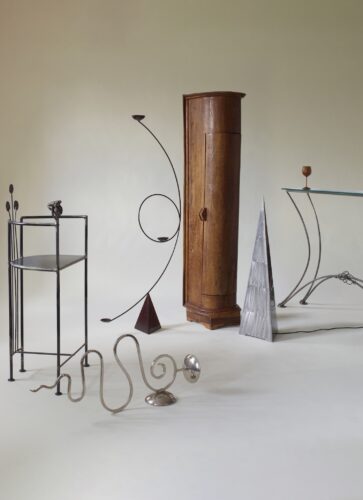
Alfie di Trolio It’s difficult for me to pin down an answer to that question. I’d say I’ve been a natural collector and editor of objects for as long as I can remember, gathering stones and pebbles and shells and leaves as a kid, which I still do now. Growing up, we’d spend summers in Italy visiting family and I remember the feeling of a certain worn-down table outside a bar that was there year after year, I remember the smell of overripe melons, the patterns of the block paving on the streets, the feeling of pushing through beaded curtains that hung over doorways, the icy cold water that poured out of drinking fountains on scorching afternoons in dusty towns. All these details and sensations lodged in my memory and taught me to pay lots of attention to details that enhance the experience of an object or a moment.
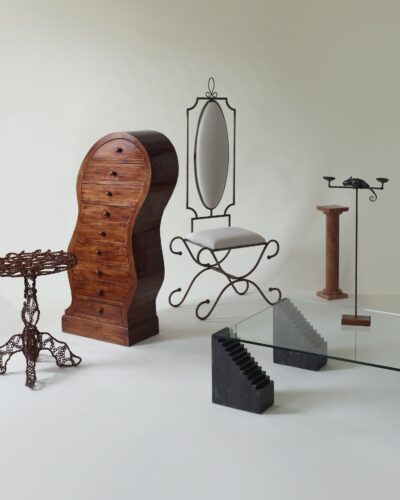
I search for objects daily, and I think there’s lots of value in looking at huge numbers of objects each day. One becomes familiar with certain characteristics, shapes, styles, material combinations, that come up often, which I think helps to bring clarity around exceptional pieces that really stand out and feel special.
Chapter There is a strong narrative quality to the objects you source, and each piece invites speculation. Do you think storytelling is part of your role as a dealer?
Alfie di Trolio Storytelling and imagination are very important. I’d like to think that the pieces I find can spark memories or the imagination in some way. I select objects for Oculus through frames of reference from history and myths and folk tales and nature. I guess these motifs can feel very connecting and universal, but can also feel very personal. I want Oculus to feel like a total world where every object from the banal to the indulgent gets the chance to be the most special version of itself. The objects I select should feel like they’re connected to each other in some way, all contributing to this wide-ranging but somehow cohesive output.
Chapter As a set designer, your work often creates quiet, highly composed atmospheres, while your furniture dealing is shaped by more exuberant, decorative, and unruly objects, creating an almost surreal world of its own. How do these contrasting modes inform each other, and has moving between staged images and lived objects changed the way you think about actual living spaces?
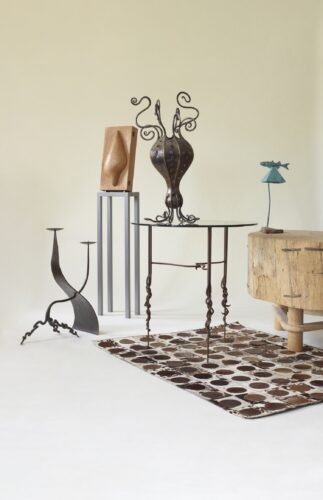
Alfie di Trolio Working as a set designer commercially and editorially for still life photography, one of the most powerful tools I have available is the ability of objects to describe a time and place and mood. They’re in service of the overall story, and very often a client’s product. With Oculus, I can indulge in objects with a more boisterous tone of voice and a more commanding presence. I want them to feel heady and fantastical.
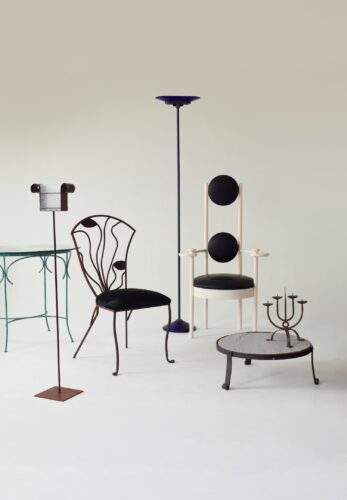
There’s something intuitive in how these two outputs developed, maybe it’s two sides of my character antagonising each other. I’ve enjoyed the process of honing these styles and seeing how far they could be pushed apart from each other. My personal living space is a perfectly chaotic live/work warehouse, with set pieces and props and Oculus pieces jostling for space. There’s some magic in living among all of these pieces. I don’t know if I’d recommend this way of living to everyone, but it certainly feeds my hunger to have intriguing objects around me at all times.
ERSTMALS VERÖFFENTLICHT IN CHAPTER №XIV »IN DIALOGUE« – SUMMER 2026