

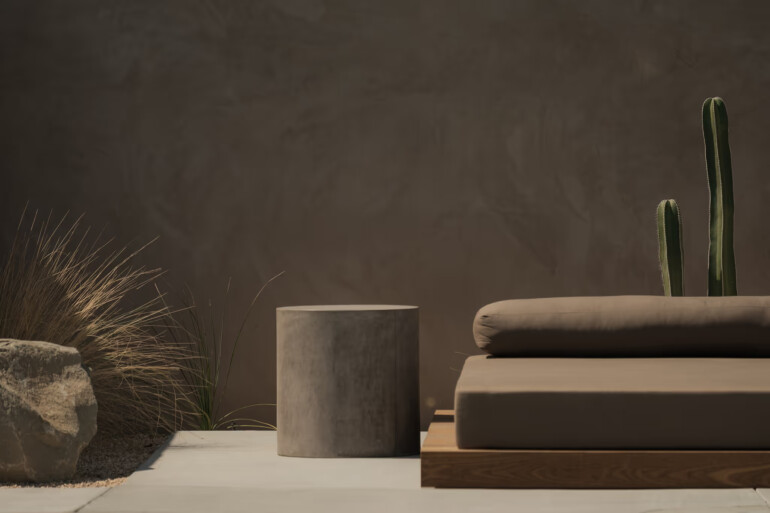
Metallverkleidete Module, reduzierte Innenräume und eine Materialpalette, die sich an der Mojave-Wüste orientiert: Das Reset Hotel nahe dem Joshua Tree National Park sucht die Nähe zur Landschaft mit gestalterischer Zurückhaltung. Ben Uyeda entwickelte die architektonische Grundlage, Gry Space prägte Interior und visuelle Identität.
Die reduzierte Architektur mag zunächst Assoziationen an eine Forschungsstation oder Mars-Kolonie wecken. Für Emi Kitwaki und Jen Whitaker von Gry Space ging es bei der Gestaltung des in der Mojave-Wüste gelegenen Reset Hotels jedoch gerade nicht um Eskapismus. Vielmehr sollte die Konzentration auf wenige Elemente die Wahrnehmung der umgebenden Landschaft verstärken. »For us, Reset was ultimately much more about becoming present in this landscape than escaping to another world.«
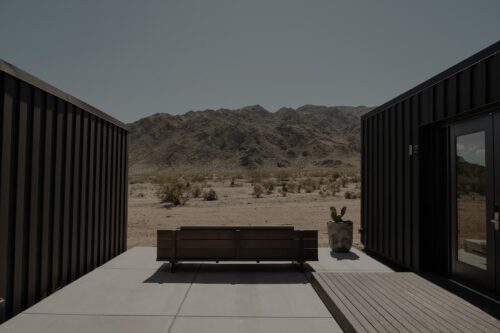
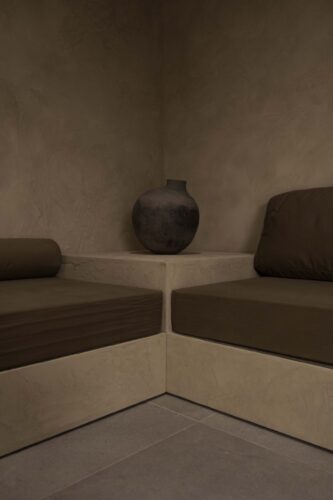
Auch die Reduktion der Innenräume leitet Gry Space nicht aus der Vorstellung einer Mars-Kolonie ab. »The reduction of the interiors came from something broader«, erklären Kitwaki und Whitaker. »We’re naturally drawn to spaces with enough emptiness to make you more aware of your surroundings, and of yourself. Rather than treating minimalism as an aesthetic, we used reduction as a way of heightening perception.«
Inspiriert von Schiffscontainern
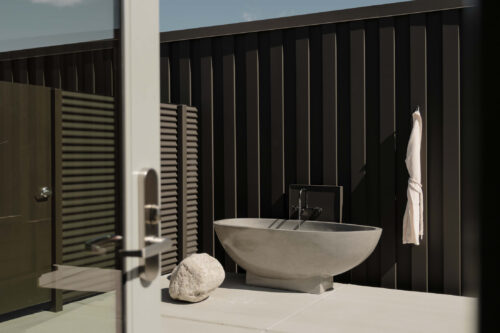
Mit dem Reset Hotel entstand zugleich der erste Hotelneubau in der Gegend seit 15 Jahren, erzählt Ben Uyeda, der für das gestalterische Grundkonzept verantwortlich zeichnet. Dass die einzelnen, jeweils mit eigener Terrasse ausgestatteten Zimmer wie auch die Gemeinschaftsbereiche an Schiffscontainer erinnern, ist kein Zufall. »I made a documentary series on building a shipping container house before to debunk a lot of myths about them. Over 20 million people watched the series and I got offers from investors to build more of what they already saw. I suggested other ideas but ultimately a tangible starting point with a complete example building was the most investable option«, erklärt Ben Uyeda den Ursprung seiner Idee.
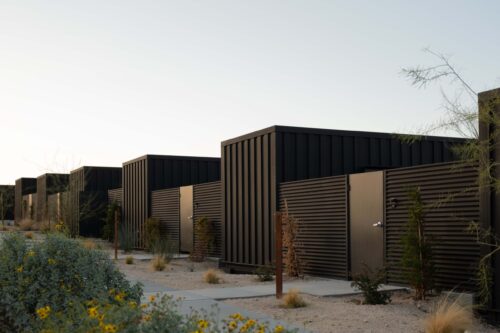
Das modulare Layout der Anlage habe sich aus unterschiedlichen Überlegungen ergeben, fügt der Architekt und Designer hinzu: »We thought about what was practical given the labor availability and construction timeline we wanted to achieve. We were building the foundations at the same time the modules were being constructed. The layout was derived from considering the views with the infrastructural requirements of the city state and county.«
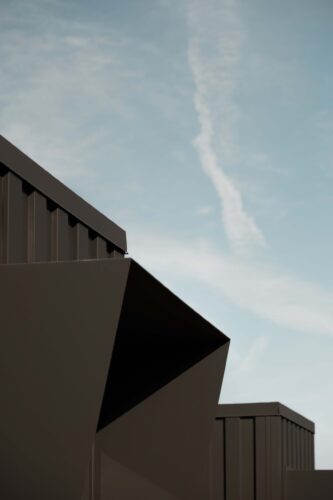
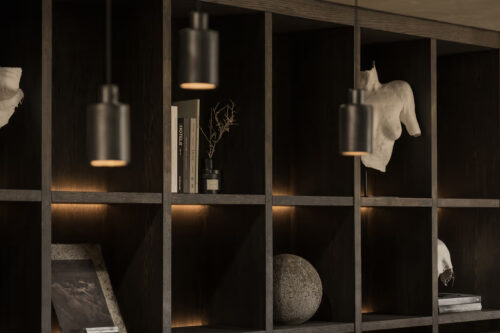
Uyeda hat nicht nur die Grundarchitektur entwickelt, sondern auch maßgefertigte Holzmöbel für die insgesamt 65 Zimmer entworfen, darunter klappbare Schreibtische und Einbauregale. Der Check-in-Schalter aus oxidiertem Stahl wurde von Hand patiniert und stammt von Gry Space. Bei der Materialauswahl sei die Wüste ihre wichtigste Inspirationsquelle gewesen, halten Emi Kitwaki und Jen Whitaker fest. »The desert landscape is defined by impermanence, constantly shifting through light, wind, erosion, and time. We wanted the material language of Reset to both honor that transience and hold a certain permanence against it. Stone, earth, oxidized steel, and lime plaster were chosen for their weight and elemental quality, but also for their capacity to age, weather, and evolve, allowing the architecture to develop a deeper visual language over time.«
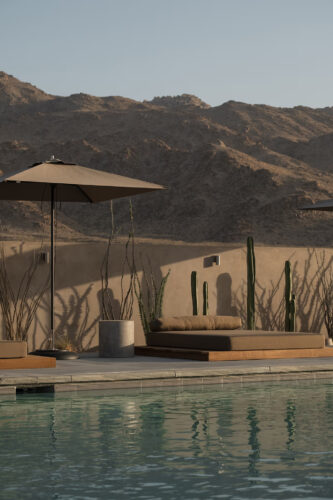
Durch die Reduktion und die Materialauswahl sei das Interior des Reset Hotels eher zu einer Erweiterung der Landschaft als zu einem klar davon abgegrenzten Bereich geworden – »blurring the threshold between inside and out«. Die Landschaft miteinzubeziehen, bedeutete für Gry Space jedoch keineswegs, dass sich die Wüste auf buchstäbliche Weise in Bildern, Möbeln und anderen Objekten wiederfinden muss. »Instead, we looked at it atmospherically: the muted mineral tones, the dryness and roughness of the terrain, the intensity of the light, and the enormous presence of negative space. These qualities became embedded in the material and tonal language of the clubhouse units, pool, and room interiors, creating an interior that feels less like a representation of the desert and more like a continuation of it.«
Vom Branding zum Interior
Sie seien von Anfang an in das Projekt involviert gewesen, erzählen Emi Kitwaki und Jen Whitaker. Wenn auch zunächst in etwas anderer Form: »We were originally brought on to develop the branding for Reset, a period we often refer to as our first date with the project. It became a way to understand how we worked together, and after the branding was complete, our role expanded into shaping the interior language. Ben and Adam (Anm.: Adam Wininger, Co-Founder des Reset Hotels) had already established a strong architectural framework and relationship to the landscape. Rather than soften or disguise its rawness, we wanted to work in tension with it, introducing tactility, intimacy, and warmth while preserving the clarity of the original concept.«
Aus dem Branding entwickelte sich so eine Zusammenarbeit, in der Architektur und Interior zunehmend ineinandergriffen. Die Frage, wie ein Raum aussieht, trat dabei immer wieder hinter eine andere zurück: wie sich seine Gestaltung auf die Wahrnehmung des Ortes auswirkt. Im Reset Hotel führt diese Frage konsequent zurück zur Wüste, die draußen beginnt und im Inneren präsent bleibt. [SW]