

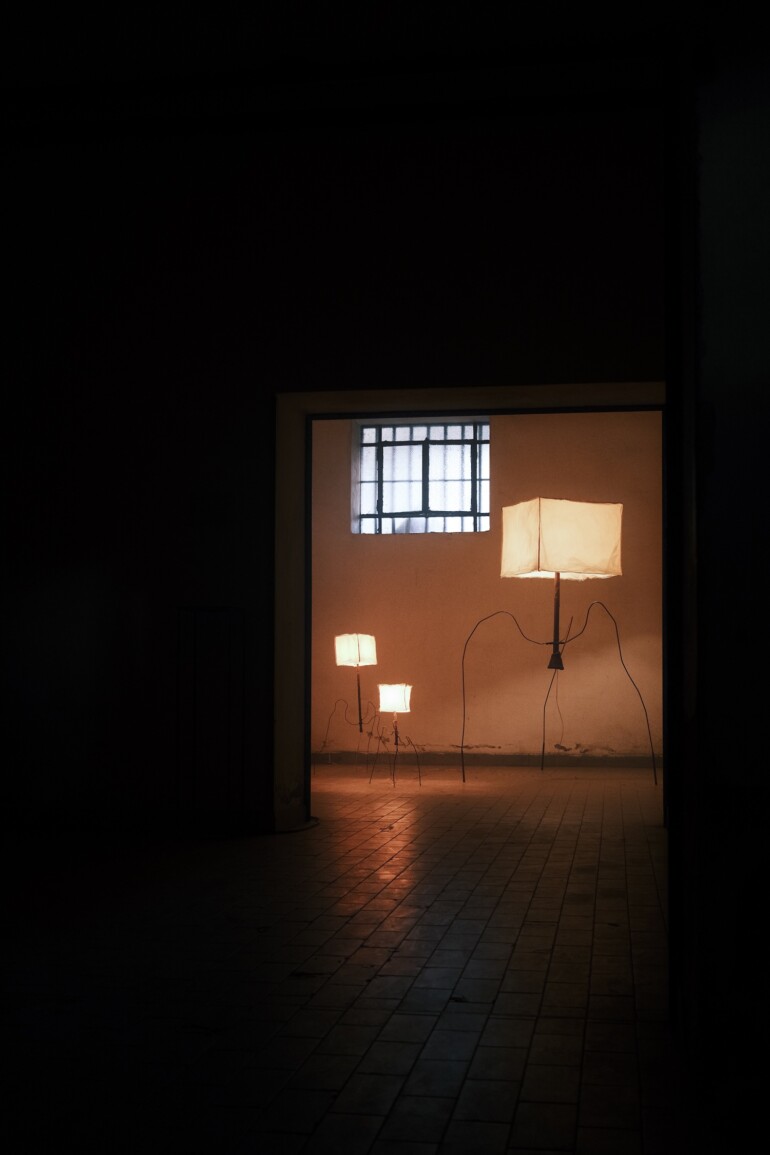
Fenna Kosfelds skulpturale Objekte laden dazu ein, sich bewusst mit ihnen und den Räumen, in denen sich befinden, in Beziehung zu setzen – körperlich und emotional. Die Arbeitsweise der in Berlin geborenen und zwischen Barcelona und Frankfurt arbeitenden Künstlerin und Materialdesignerin ist von Intuition und kindlicher Neugier geprägt. Kosfeld, die Fine Arts am Chelsea College of Arts in London sowie Materialdesign in Barcelona studierte, verbindet in ihrer Praxis experimentelle Materialforschung mit atmosphärischer Lichtgestaltung und arbeitet unter anderem mit oxidiertem Metall, Keramik, karbonisierten Knochen, Stahl, Textilien, Kohle und Biopolymeren. Außerdem ist es stets der poetische Gehalt eines bestimmten Materials, der sie dazu antreibt, sich damit auseinanderzusetzen. Im Gespräch mit Chapter erzählt sie davon, wie es sich anfühlt, künstlerische Prozesse nicht zur Gänze kontrollieren zu wollen, und von ihrer Beziehung zu Licht als »spiritual force«.
Chapter In an interview you said that your process usually begins with an urge rather than with a concept. What can that urge look like?
Fenna Kosfeld You know the feeling when you dance or move your body and find a really good stretch that you want to stay in because it is releasing or expanding something? You have this natural urge to continue and explore it. That is how I would describe my urge to create and make. It can start with an observation, a movement, a thought or a touch. If it tickles the brain the urge for continuation and play is sparked.
Chapter Is there a difference between inspiration, as it is often talked about in the context of art, and this kind of impulse you experience?
Fenna Kosfeld I think it is a synergy of ideas, inspiration, and physical impulse that brings things into movement and existence. The driver for me is mostly that embodied impulse, which can feel like a vibration or shock wave – excitement, curiosity, or fear. It is physical as well as emotional. But from there, it starts interacting with all the influences I carry subconsciously. Things begin to roll and take shape by connecting the dots of subconscious impulses with intellectual ideas and relational inspiration.
Chapter Does experience – with a certain material, for instance – sometimes get in the way of intuition or curiosity?
Fenna Kosfeld No, the material itself never really gets in the way of my curiosity. If anything, it is a never-ending fractal to observe, touch, sense, and wonder about. What can get in the way is the necessity to freeze something in time – to go against this intuitive cycle of constant transformation. It is almost unnatural to stop and capture a moment, yet we need to do it to grasp our existence and ground ourselves mentally. Photography does this very literally, but we also do it with materials and ideas. To stop time and change.
So perhaps it is not experience that interferes with intuition, but this act of fixating a moment and state in time. I would rather play and dance with a stone, transform it, and have it transform me in a never-ending process. But of course, that is impossible. Otherwise, I could not act or make decisions.
Chapter Has there ever been a phase in your life when you felt like you had lost your sense of wonder?
Fenna Kosfeld No. I would say my sense of wonder has been the one constant, saviour, and driver that keeps me going. You could describe it as my inner child, which I refuse to stop nurturing just because societal or situational conventions might ask for it.
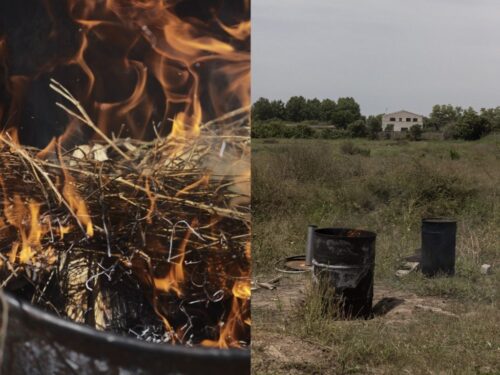
What I have lost at times is the will to make – to add more »stuff« to the world – and I have doubted whether making art is necessary at all. I think those questions are important, but they can also eat you from the inside and shush the inner child’s urge to understand and process simply by doing. That is what art is all about, I think. To relate and to reflect. So the wonder is never really lost, but external or mental circumstances can blur or numb it. That is why it is important to play and not take oneself too seriously.
Chapter Would it be an oversimplification to say that in your work, the material itself is in control? More so than you are?
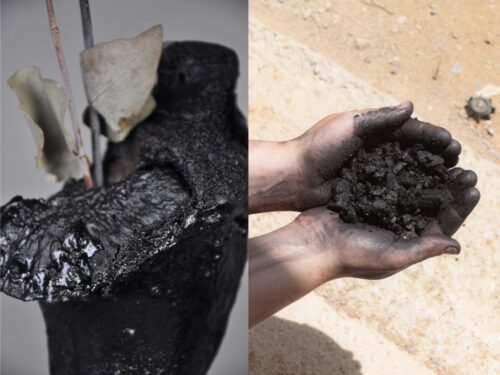
Fenna Kosfeld I think it is less about control and more about a dance or conversation. I choose a material for poetic and symbolic reasons, so of course the material has no choice. But rather than manipulating it into a seemingly perfect form, I prefer to trust the process of unfolding. The carbonized bones I currently work with, for instance, change in surface, shimmer, and shape depending on countless conditions inside the kiln. There are many approaches one can take within a practice. One more controlled approach would be to analyze those conditions, choose a desired outcome, and reproduce it. The other is to leave space for spontaneity, unfolding, and expression beyond my control. I switch between approaches as they reveal inherent tensions. But mostly, I am drawn to the latter. That is where it becomes interesting to me.
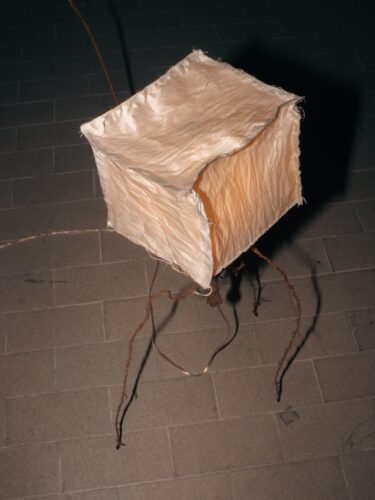
Chapter Would you say that there is something ritualistic about the way you work with materials?
Fenna Kosfeld Yes, but not in the sense of a religious or direct cultural reference. More in an energetic sense: collecting materials, listening to the life around me, making fire, observing transformation, the breathing in between. There is an act of honouring the presence and the moment of transformation. For me, that is meditative. It gives me a sense of connectivity, focus, and peace.
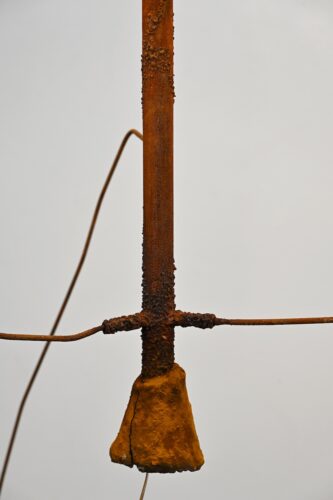
Chapter What sparked off your interest in light in the first place?
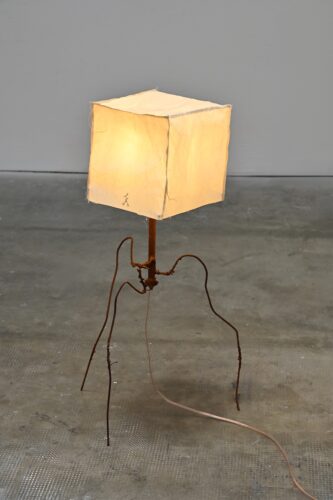
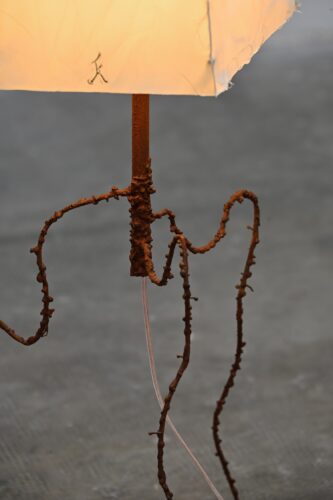
Fenna Kosfeld I have a strange relationship with light because I feel very sensitive towards it and very much enjoy the darkness or simply the absence of light. Nevertheless, I often find myself acting like a moth, constantly drawn towards light, curious about how it affects me physically and psychologically. Since I started making, I have incorporated light into my sculptural objects, often combining found branches from my forest journeys with simple LEDs. Looking back, I realize I was already interested in the relationship between matter and illumination long before I consciously understood it. When reading Louis I. Kahn’s book Silence and Light, I encountered the statement »Light is the Giver of Presence« in the context of architecture. That idea has stayed with me ever since. Light operates on a spectrum. It is functional, psychological, and aesthetic. For me, it has a spiritual, healing force.
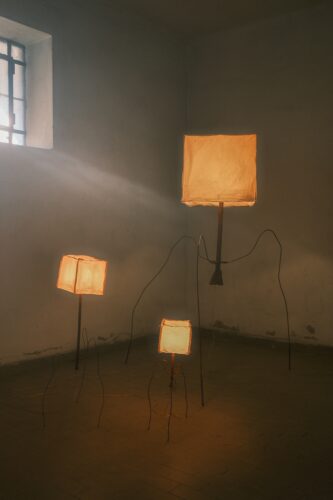
Chapter How do you know when a piece is finished – when there is nothing that can be added or taken away?
Fenna Kosfeld When it becomes its own. There is a really interesting moment when sculpting, drawing, or crafting where something shifts from what I intend to do towards the intuition and character of the material itself. At some point, it no longer feels like me adding or taking away, but like an encounter with something beyond and other than myself. That is usually where I stop and pay attention to where this thing might want to go for itself. [SW]