

INTERVIEW DZENANA MUJADZIC
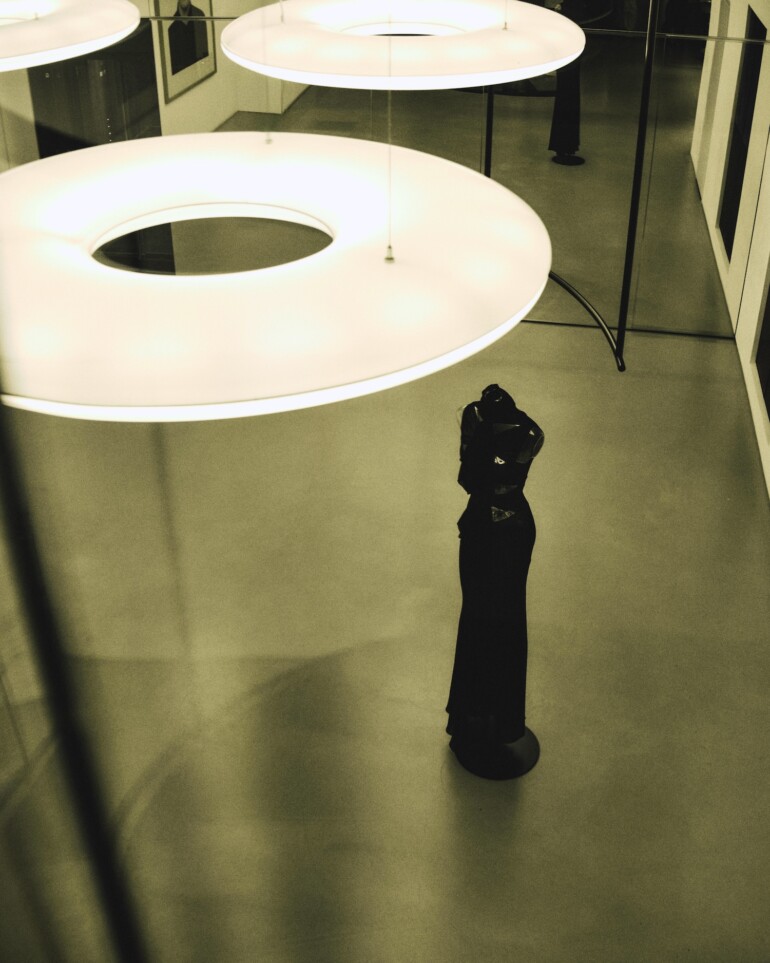
Die Arbeiten der französischen Fotografin Mathilde Hiley bewegen sich zwischen Stillleben, Malerei und einer beinahe filmischen Bildsprache. Im Gespräch mit Chapter spricht Hiley über den Einfluss von Kino, Surrealismus und Performancekunst auf ihre Bildwelt, über das Spannungsverhältnis zwischen künstlerischer Interpretation und kommerzieller Fotografie sowie über die Frage, wie Objekte im fotografischen Prozess ein Eigenleben entwickeln können. Ausgangspunkt und gemeinsamer Nenner ihrer Arbeit ist dabei oft nicht das Objekt oder der Raum selbst, sondern dessen Potenzial, etwas Menschliches, Erinnerndes oder Unbewusstes hervorzurufen.
Chapter How do you approach the image-making process so that an object feels animated, or even alive, within the frame, and how much of that comes from careful planning versus unexpected moments that unfold through experimentation?
Mathilde Hiley Nothing is truly prepared in advance. Of course, I know which background I want, the kind of light I imagine, the atmosphere I want to create in broad terms. But what makes an object come alive only happens once I am facing it. I spend time observing it, and after a while my eyes begin to see something else. The barrier of reality disappears and a real artistic process starts for me. I forget all the rules and begin seeing shapes, emotions, memories, movies, even smells. The object starts reminding me of something human, and from that moment I instinctively humanise it. It becomes a silent dialogue, almost a face-to-face between the object and myself. I think the process that makes an object feel alive is something extremely instinctive for me, and I believe that is what makes art beautiful in general. It happens when I completely surrender myself to my own imagination. At that moment, I do not control anything at all.
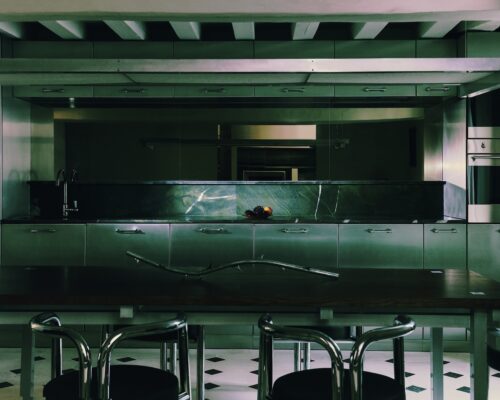
»Close Encounters of the Third Kind«, Apartment, Paris;
Interior Design von Jeremy Chaillou | Chaille;
Styling und Kuration von Maxime Chaiblaine
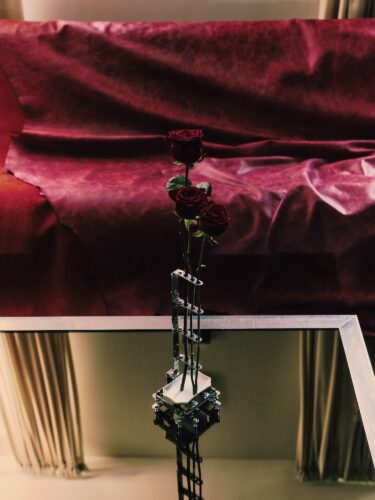
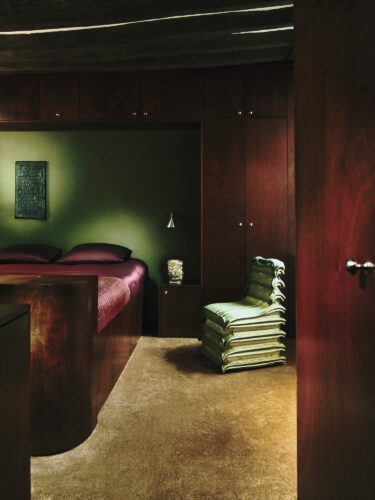
Chapter Your work often seems to move between still life photography and painting, resulting in something closer to a kind of portraiture of objects. Where do these different visual languages influence your work, where do they escape your control, and how do you create a balanced dialogue between what is already there and what you want the image to become?
Mathilde Hiley Still life photography, for me, is deeply connected to painting through the time spent observing an object and slowly shaping the light around it. I can spend hours adjusting a single detail until the object begins to reveal another presence. There is something very contemplative about this process. Cinema also deeply influences the way I build images. The lighting I use, the atmospheres I create, and even the titles of my series often come from films or cinematic memories. When I work with an object, I try to completely detach it from its original function. I am not interested in what it is supposed to do, but in what it can evoke. I focus on its shape, texture, and materiality. My work begins once the object stops being functional and becomes something simply beautiful.
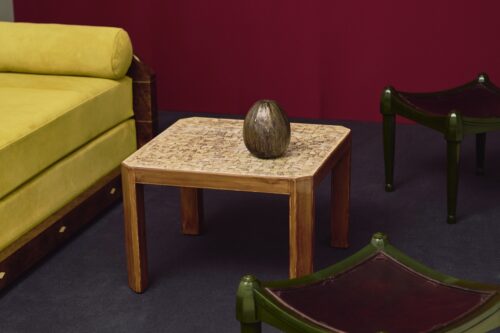
»un Goût, 1925«, fotografiert für Galerie Maxime Flatry
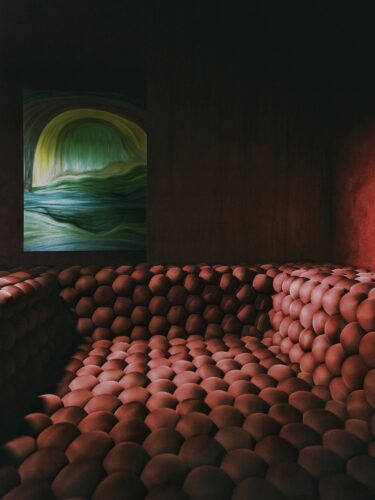
»Amoreba«, entworfen von Architekt Ariel André | Studio GOLEM
Chapter When working commercially, there is often a need to show a project or object quite faithfully. How do you balance that responsibility with your instinct to elevate, transform, or interpret through art photography?
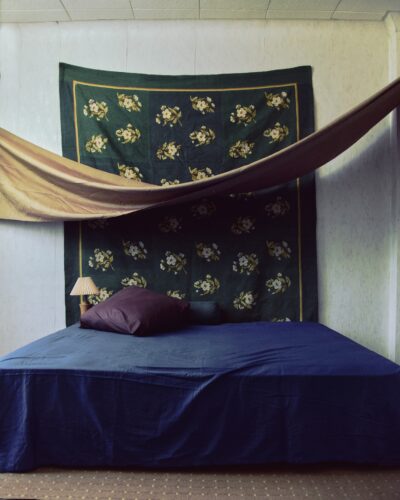
Mathilde Hiley I think this is actually one of the most difficult parts of working commercially. At the same time, it is also a very important constraint for me because it keeps me grounded in reality. If it were entirely up to me, I think my images would probably become extremely dark, atmospheric, and almost abstract. I naturally tend to focus on shadows and mood more than on the object itself. But commercial projects constantly remind me that an object also needs to be seen and understood. Clients want to show the textures, the shape, the function behind the piece. And I think this tension is actually very important for my work. It forces me to stay grounded while still allowing me to create an atmosphere around the object. So my role becomes finding a balance between clearly showing the object and building an emotional world around it.
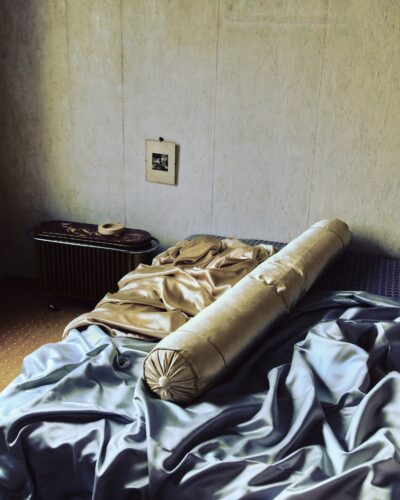
»Four Corners«; Styling und Kuration von Maxime Chaiblaine
Chapter What kind of art has shaped your way of seeing most deeply, and is there a particular artist, work, or visual idea that continues to serve as a north star for your practice?
Mathilde Hiley All forms of art have always deeply inspired me. I have always been fascinated not only by visual art, but also by performance, music, and cinema. It is actually difficult for me to name only one artist, as I feel inspired by so many different media. I grew up admiring strong female artists such as ORLAN and Marina Abramović, as well as artists working with graphic design, such as Barbara Kruger. I was also deeply influenced by Valérie Belin for her photographic approach, or fascinated by the monumental power of Bill Viola’s video installations. I think what naturally led me toward a more pictorial approach to photography was Impressionism and Surrealism. They were the first artistic movements that truly opened the doors of art for me. Today, what interests me most is precisely the absence of boundaries between disciplines, and I would love to continue dissolving those boundaries myself, beyond photography alone.
FIRST PUBLISHED IN CHAPTER №XIV »IN DIALOGUE« — SUMMER 2026