

Interview Dzenana MUJADZIC
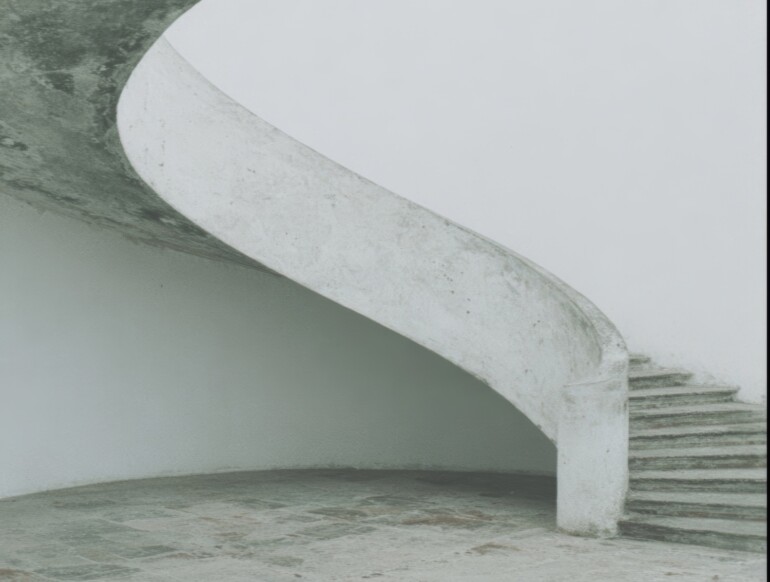
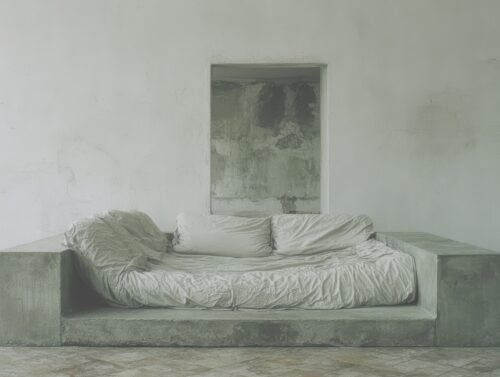
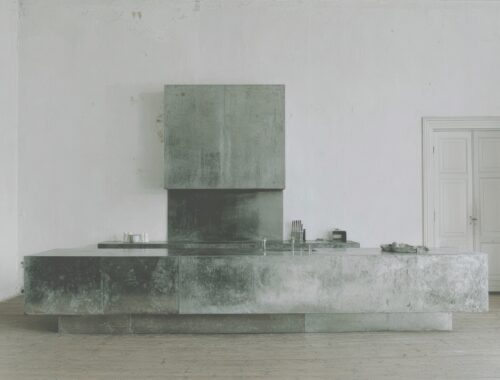
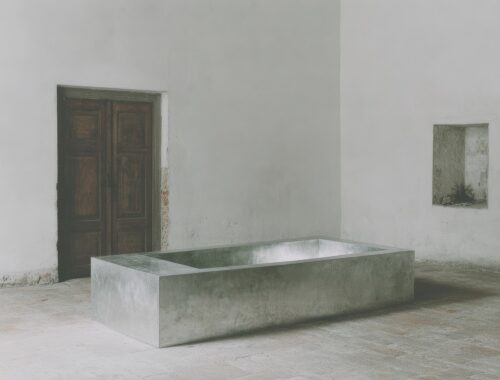
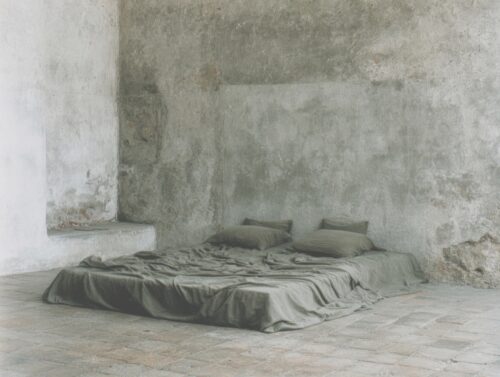
/untitled, gegründet von Mauro Cecchetti und ansässig zwischen Paris und Zürich, verbindet räumliche Gestaltung, visuelle Erzählung und Klang. Mit der KI-generierten Serie »The Quiet Guest« entwirft das Kreativstudio Interieur-Szenarien, die trotz ihrer fast leeren Räume von Spuren menschlicher Präsenz geprägt sind. Eine fiktive Arbeit, entstanden aus konkreter menschlicher Vorstellungskraft und in kollaborativer Zusammenarbeit mit den weit geöffneten Möglichkeitsräumen generierter Bildproduktion.
Chapter Your AI-generated work series The Quiet Guest feels like a very specific, zeitgeist-y collection of spaces shaped by absence and atmosphere. Where did the initial impulse for the project come from, and what kind of emotional or spatial condition were you trying to reach through these images?
Mauro Cecchetti We are interested in what happens to architecture when it’s stripped of its user. This is a condition we’re increasingly living in: many of the spaces we know exist primarily as images on screens. We encounter buildings through renders before they’re built, through photographs long after. The Quiet Guest investigates that gap. These rooms are emptied of narrative, of social construction, of the body. What remains is material, light, weathering, and a figurative presence, the suggestion of someone who’s just left, or about to arrive, reaching a spatial condition of pure atmosphere, where the image itself becomes the architecture rather than a representation of it.
Chapter When working with AI, do you experience the process more as directing, collaborating, surrendering — or as a kind of dialogue? At what moments do you consciously take control, and when do you allow the system to surprise you?
Mauro Cecchetti It’s a dialogue, but only if you learn to speak the language. That’s the crucial part. Working with AI isn’t about control or surrender; it’s about fluency. You have to learn how the system thinks, what it responds to, how to phrase a request so it understands the condition you’re after, like the linguist in Denis Villeneuve’s Arrival (2016). Once you’re fluent, you stop translating and the tool starts to shape what you’re able to imagine. When you reach that point, the question of who’s in control becomes irrelevant. We’re both in control at the same time and neither of us is. It’s not about controlling the machine but understanding it.
Chapter The title The Quiet Guest already suggests a figure that is present but difficult to fully grasp. Traces of presence seem to linger everywhere. How do you create emotional intimacy within a process that is, at least technically, non-human?
Mauro Cecchetti Philip Glass was an early adopter of Farfisa organs, synthesizers, tape loops, and MIDI systems — yet he produced some of the most emotionally resonant music of the last century. The technology doesn’t generate the feeling. The human input does, with such sensitivity that the machine becomes irrelevant. The intimacy in The Quiet Guest works the same way. It’s generated by human decisions, executed through a machine. AI just makes the authorship more visible; there’s no pretense of documentation. The intimacy is created by how we perceive technology, because we keep trying to humanize it to find ourselves in it.
Chapter In your experience, where does AI genuinely expand the possibilities of spatial or visual storytelling — and where does human intuition, sensitivity, or lived experience remain irreplaceable?
Mauro Cecchetti AI expands the speed and consistency of execution to a degree that’s hard to overstate. A spatial atmosphere that would take a week to render by hand can be investigated in an afternoon. What remains irreplaceable is judgment. The system can generate ten thousand rooms. It cannot tell you which one matters. It cannot tell you that absence is more powerful than presence, that weathering on concrete reads as memory, that a certain quality of light feels like grief. Those decisions come from having spent time in real rooms, from having lost things in them, from memory. Lived experience hasn’t been replaced by AI yet. It’s the only thing left that the machine cannot do. So we do it.
ERSTMALS VERÖFFENTLICHT IN CHAPTER №XIV »IN DIALOGUE« – SUMMER 2026