

Text Dzenana MUJADZIC
Jungjin Lees Fotografien scheinen in einem Raum zwischen Materie und Geist zu existieren, in dem Landschaft zum Spiegel innerer Wahrnehmung wird. Die südkoreanische Künstlerin verwandelt persönliche Momente in der Natur in universell lesbare Meditationen über Zeit und Stille. Im Gespräch mit Chapter reflektiert sie über das Gleichgewicht zwischen Kontrolle und Hingabe – und darüber, wie sich Harmonie zwischen dem Selbst und der natürlichen Welt finden lässt.
Chapter Your images seem to blur presence and absence—what does the idea of identity mean to you in the context of your work?
Jungjin Lee When inspiration arises in the landscape, it is a moment when my spiritual presence aligns with the subject. This experience goes beyond thought and is difficult to explain in words. I see the act of visualizing the energy inherent in nature as a way to express not only my identity, but the universal truths of human emotion. The Taoist idea of selflessness—letting go of the ego and becoming one with nature—is a fundamental concept I pursue throughout my process. While my images may appear ambiguous, the emotions they convey are clear. During photographing and printing, I focus entirely on my own feelings, yet I do not consider the work as a direct reflection of my personal identity. Instead, my photographs carry the »breath« of human existence, which I see as the power of art. I have observed that viewers often encounter their own inner emotions through the work rather than mine.
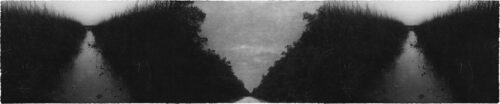
Everglades #11, 2014-15
Chapter Many of your images seem to hold time still, yet they are deeply infused with change—weather, erosion, light. How do you think about time not only as a subject, but as a collaborator in your process?
Jungjin Lee Weather and light are always essential elements in landscape photography. In my work, light itself often becomes the source of inspiration, almost as if the image is drawn by it. The sense of time in my photographs leans more toward duration than fleeting moments. Although the images may appear frozen, they are not static; they suggest a timeless state—a presence that unfolds as the viewer engages with the work. I see this as an energy beyond time and space, subtle yet palpable. When I photograph, it is crucial for me to empty my thoughts and surrender to the subject and to nature. Rather than imposing myself, I attempt to read what is already present. It is not a collaboration with nature in the conventional sense, but an acknowledgment that I can express only as deeply as I am able to receive what nature reveals.
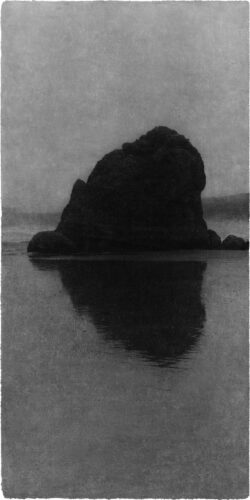
Opening #13, 2015-16
Chapter Your compositions are oftentimes pared down to essentials—silence, texture, tone—yet they feel emotionally vast. What emotional space do you hope the viewer inhabits when encountering your work?
Jungjin Lee The printing process in my studio is as important to me as the act of photographing itself. Through printing on hanji, I work to amplify simplicity and abstraction, attending carefully to the texture of the paper and the depth of tonal expression. The philosophy of yeobaek—the presence of space—emerges naturally both in photographing and in printing. »Emptiness« is not »nothing«, but an infinite expanse of another dimension. I hope my work is experienced not merely with the eyes, but with the mind. It is my intention to convey the quiet awareness I feel before the subject. In this way, viewers often encounter their own inner state rather than the narrative of the artist. I describe this as the condition of human existence, a quality revealed only in works that have reached their fullest realization.
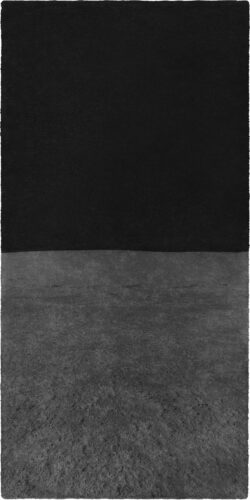
Opening #01, 2015-16
Chapter What personal source of inspiration has remained almost inexhaustible for you as an artist over the years?
Jungjin Lee It is solitude and nature. Solitude has allowed me to live as an artist, while nature embraces that absolute solitude. In nature, I realize that the solitude I have known is not merely a personal feeling, but the essence of human inner being. In the moments when I am absorbed in photographing, that solitude transforms into a sense of fullness through the presence of the subject. I feel as though I become part of nature—those are my happiest moments. In this sense, the camera becomes a profound instrument that mirrors my inner being in the objects and scenes I encounter.

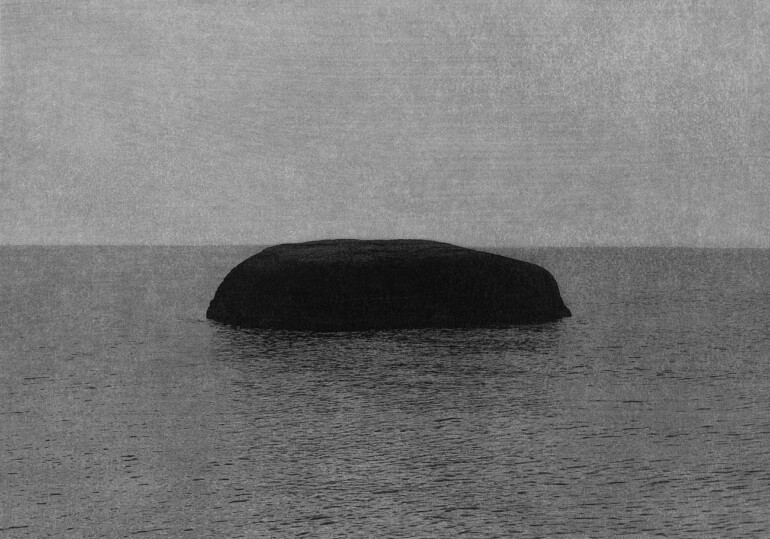
Everglades #01, 2014-15
ERSTMALS VERÖFFENTLICHT IN CHAPTER №XIII »IDENTITY« – WINTER 2025/26