

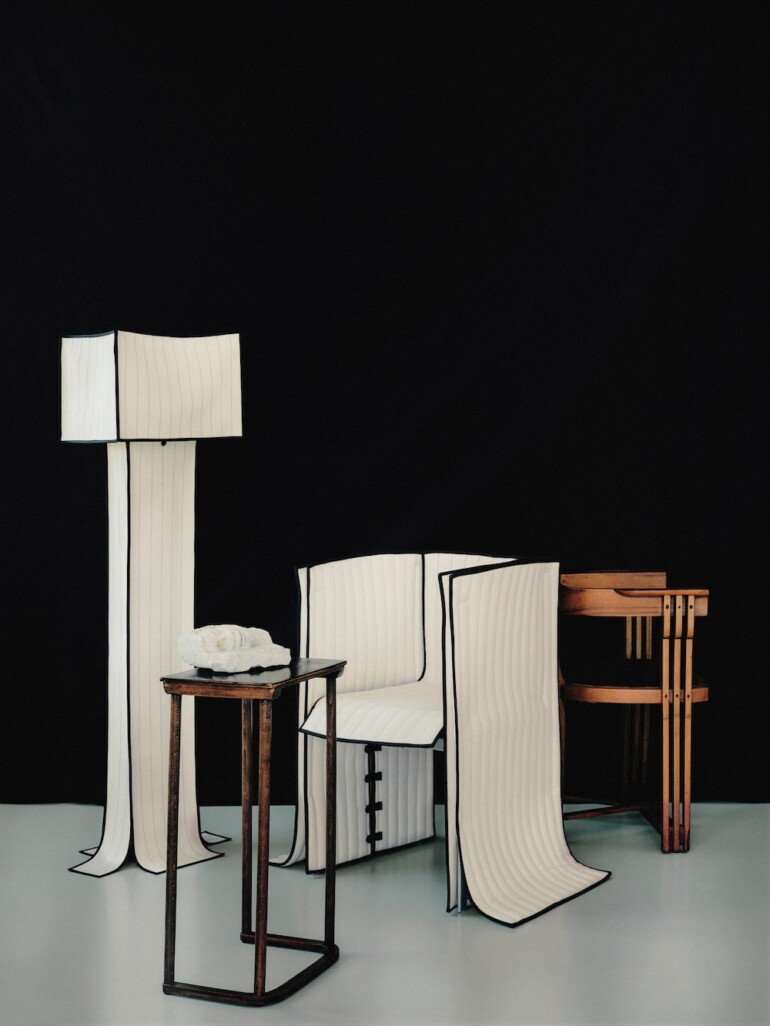
Mit Innenkreis eröffnet am 19. März 2026 in Kopenhagen eine neue Galerie, die zeitgenössische funktionale Arbeiten bewusst in einen Dialog mit historischen Positionen der dekorativen Künste vor 1940 stellt. Den Auftakt bildet die Ausstellung »Raiments« der dänischen Designerin Lærke Ryom, deren Praxis sich durch einen materialorientierten, handwerklich geprägten Zugang zu Möbeln auszeichnet. Mit diesem Ansatz verbindet Gründerin Zeynep Rekkali Jensen zeitgenössische Designpositionen mit historischen Referenzen und eröffnet einen kuratorischen Rahmen, der funktionale Objekte als Teil eines fortlaufenden kulturellen Dialogs versteht. Im Gespräch mit Chapter spricht sie über die Idee hinter der Galerie, ihre kuratorische Perspektive sowie über Fragen der Vermittlung von Design und Handwerk in der Gegenwart.
Chapter What led you to the curatorial idea of placing contemporary functional works in dialogue specifically with pre-1940 decorative arts?
Zeynep Rekkali Jensen For me, integrating historical works felt more honest. In real life, our homes are never purely contemporary or purely historical. So curating a strictly contemporary environment felt slightly artificial to me, almost like pretending objects exist outside the flow of time.
The choice of pre-1940 decorative arts was deliberate. These objects reflect a moment before industrial standardisation dominated design and before ornament was vilified by modernism. Decorative elements, especially figurative ones, were still natural and coveted. I love that. I want to see Goddess Artemis with her crescent crown on objects around me. For me, objects that allow us to feel something, not only to use them efficiently, are vital.
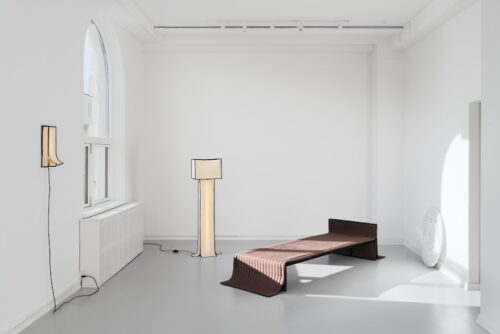
Additionally, the world already has exceptional mid-century and late 20th-century design specialists, so I did not feel drawn to that canon. Instead, my aim was to contribute more poetry.
When I choose the historical pieces, I prioritise those that clarify and reinforce the exhibition’s conceptual theme, connect the narrative, or introduce a timeless, visionary design perspective.
For example, the armchair by Anton Pospischil was exhibited at the MAK in Vienna in 1902. I like to remember that our work now is not entirely new. Designers in the past also worked at the edge of their time, with skill, vision, and patience. It is humbling and inspiring.
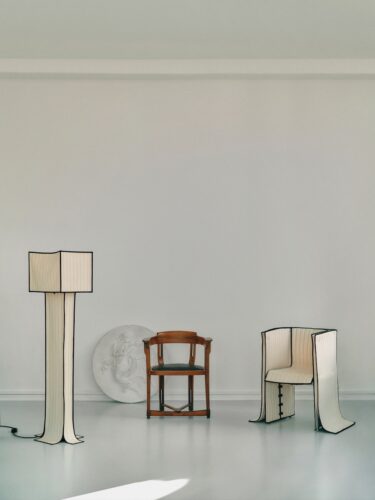
Chapter Would you say the placement of contemporary works alongside historical pieces such as Josef Hoffmann’s nesting tables or a Gio Ponti lamp shapes the way viewers engage with the objects—and encourages the slower looking that craft-based work requires? And more broadly, how do you approach cultural mediation in a time of shrinking attention spans and a culture increasingly experienced through screens?
Zeynep Rekkali Jensen I don’t think of it as fighting against shrinking attention spans, but rather creating the conditions for attention to return. The gallery space is intentionally calm, and I’m very invested in the meeting point between craft and conceptual thinking.
Craft-based objects retain a quality that cannot be digitised: their weight, texture, and presence. The conceptual narrative of the exhibition, the craft processes, and the dialogue with historical pieces all mediate the work for the viewer.
The historical objects serve as anchors in the room, establishing continuity amid a culture that moves rapidly from one image or trend to the next. Their presence, shaped by time, shifts the atmosphere and slows the experience, emphasising a connection between past and present.
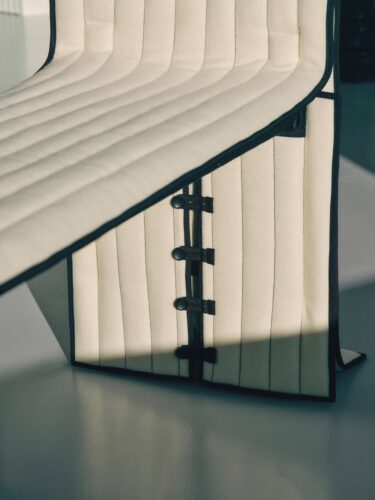
Chapter Why did you choose Lærke Ryom’s exhibition Raiments as the opening show for Innenkreis? What made her practice the right starting point for the gallery?
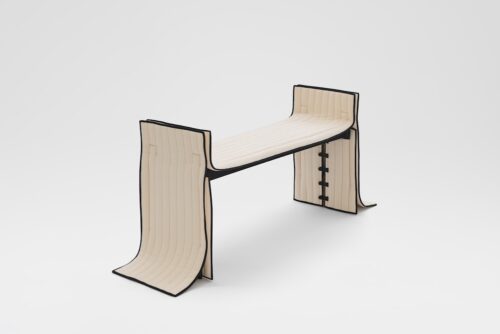
Zeynep Rekkali Jensen Textiles can appear gentle at first glance, but the decisions behind them are extremely technical. That tension, softness that is actually structural, feels very much like the spirit of Innenkreis.
What I admire about Lærke is that she is both an impeccable designer and a deeply committed craftsperson. When you sit in her pieces, you immediately feel how carefully they are designed. They are incredibly comfortable, which places them within that Scandinavian tradition of thoughtful, human-centred design.
She pushes that tradition further. In this exhibition, every piece is hand-stitched. This creates a completely different rhythm of making.
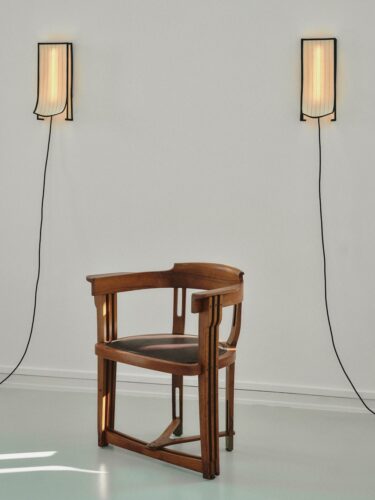
Chapter Ryom speaks of »dressing« furniture rather than upholstering it, allowing materials to drape naturally rather than forcing them into rigid forms. Would you say this approach reflects a more co-creative relationship between material, craft, and function in contemporary design culture?
Zeynep Rekkali Jensen Yes, absolutely. Lærke references philosopher Michel Serres’s notion of hospitality as mutual transformation. To host is to accept change. In her work, the furniture frame becomes a host. It offers structure and support while letting go of control. What emerges through that negotiation is an object formed through care rather than command, where softness is an ethical refusal of control. This refusal challenges the hierarchies inherited from functionalist modernism, in which structure was privileged as truth and softness was pushed aside as decoration. [Red.]