

INTERVIEW Dzenana MUJADZIC
Die jüngsten Arbeiten der in Los Angeles lebenden Fotografin Eloise Hess kreisen um Erinnerung, Wahrnehmung und die Fragilität des Festhaltens. Persönlich und intim fragen sie danach, was ein Bild sichtbar machen kann, wenn Erinnerung brüchig wird — und wie Fotografie zwischen Intention und Zufall eine eigene Wahrheit formt.
Chapter In your series Second Hand (2024) and Early Morning Tomorrow (2025), you worked together with your father Charles Hess. What motivated you to explore that collaboration?
Eloise Hess My father has Early-Onset Alzheimer’s. We’re seven years since his diagnosis and longer since the onset of his symptoms. Early in the disease he carried this insistent yearning to photograph everything. This centered the question of photography—why? As the disease progressed, he struggled to use the camera. He pointed the camera in the wrong direction, against his intention. When the photograph misses the photographer’s intention, why then? The act superseded the outcome. We found ways to take photographs together, adapting the process as his abilities changed. In what became Second Hand, I wound the film and helped him find the button on the camera, he pointed the camera and pressed the button. Sometimes he framed the picture with his hands, as if holding the camera, and I shot the picture he held. Then he could no longer find or press the button, nor hold the imagined camera in his hands. In what became Early Morning Tomorrow, he held and pointed the camera in the direction he wanted to photograph, or in a direction unintended, and I shot the picture through his viewfinder. These are not necessarily the photographs he would have taken on his own, nor the photographs he intended to take. They’re as determined by my aim as by the discomfort I felt in our two-person act. Our collaboration began when it felt called for, and ended when it was clear it should. In a wider sense it continues.
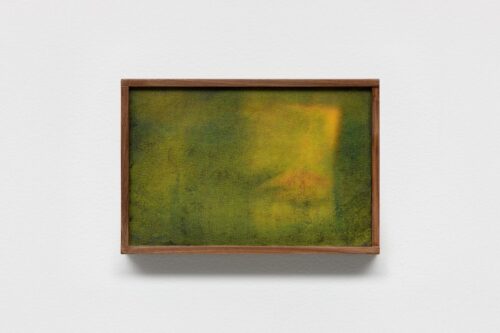
»2.27«, 2025 | Early Morning Tomorrow
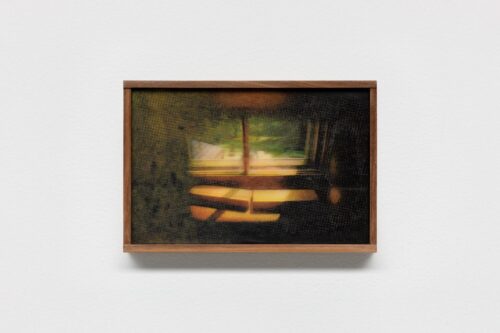
»4.27«, 2025 | Early Morning Tomorrow
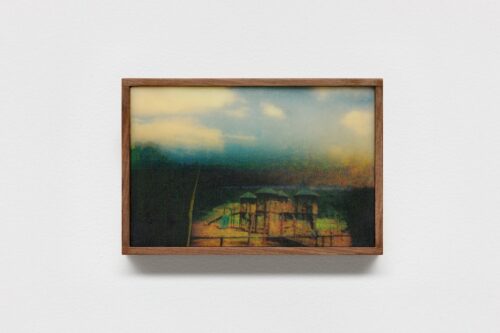
»19.27«, 2025 | Early Morning Tomorrow
Chapter In this context, how has the experience of creating this work shaped the way you think about memory and impermanence—themes often associated with age and reflection?
Eloise Hess The experience of this disease, alongside making this work, has taught me an enormous amount about the function of memory and the actuality of impermanence. As I’ve seen, when memory fails, the sense of self begins to unravel. This can be wildly painful, and also profound. Memory helps us organize our experience as our experience exceeds our capacity to contain it. It helps us to stabilize the through-line that constitutes our sense of self. Photography can be used as a tool in this construction; it often is. We often take photographs to remember our experiences—and we often remember best the ones that have been photographed. But a photograph is a cut, a limited kind of intake, a limited kind of output, cut from the whole. It can be used to close down memory, to align it with expectation—or to open up memory, to imbue it with speculation. It is a cut of the actual—made more permanent than the moment it records and the moments that surround it, yet just as partial as the moment it records and as permeable to the impressions upon it. I’m interested in a photography that reckons with this position between persistence and instability, index and impressionability.
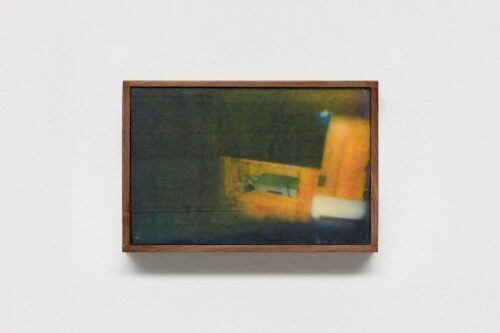
»21.27«, 2025 | Early Morning Tomorrow
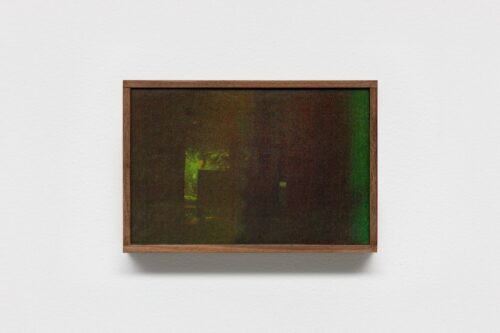
»23.27«, 2025 | Early Morning Tomorrow
Chapter More generally, what place does vulnerability hold in your artistic practice?
Eloise Hess I’m hesitant to use the word vulnerability, which comes from the word wound. I’m concerned with receptivity. Receptivity includes vulnerability, at times. To maintain receptivity means to churn through and make form of whatever comes through, however it comes. There is what compels me to make and what compels me while making, a passive and active attunement. When I feel compelled to make, it’s difficult not to try to resurrect just what compelled me to make initially, but while making, to be compelled again, differently than initially, to maintain responsiveness throughout.
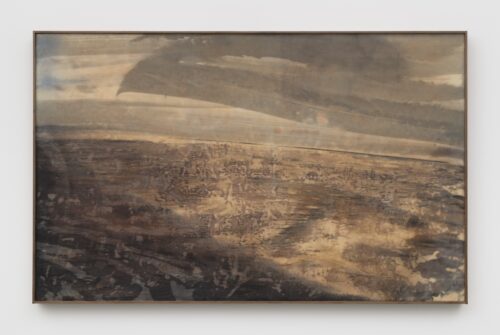
»Sky Clad«, 2025 | Picture a Train
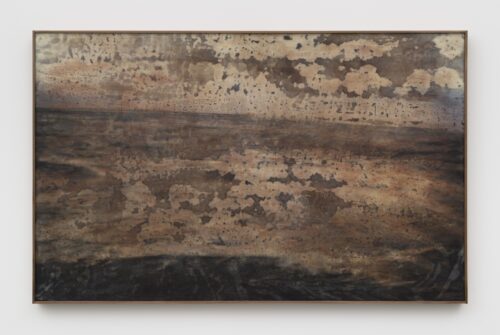
»Ledges«, 2025 | Picture a Train
Chapter You describe your work as being about the act rather than the outcome, emerging from gestures rather than observations. From your perspective, what does the process of making reveal that you can’t access through the finished image?
Eloise Hess I may have been speaking, as I said earlier, of the act of photographing superseding the outcome of the photograph. That was a lesson in that collaboration. But I don’t mean to pose the act against the outcome, or the making against the finished work. The finished work holds the entire process of making it; the act is inseparable from the outcome. The process of making reveals lots of »not it« that you can’t access through the finished work because they’re not in it. The »not its« include the photographs I don’t print, the prints I don’t choose. I make dozens more prints per painting than are included in the finished painting, and sometimes scrape off and re-make the same painting on the same panel many times over. All the »not its« help me find what it is. I spend much more time with the work in process than with the finished work. But a lot happens with the finished work beyond my making it. There is the process of the viewer, maybe many, whose experience I cannot know but which meets mine somewhere with the object.
ERSTMALS VERÖFFENTLICHT IN CHAPTER №XIII »IDENTITY« – WINTER 2025/26