

Interview Dzenana MUJADZIC | Fotografie Ryan James Caruthers
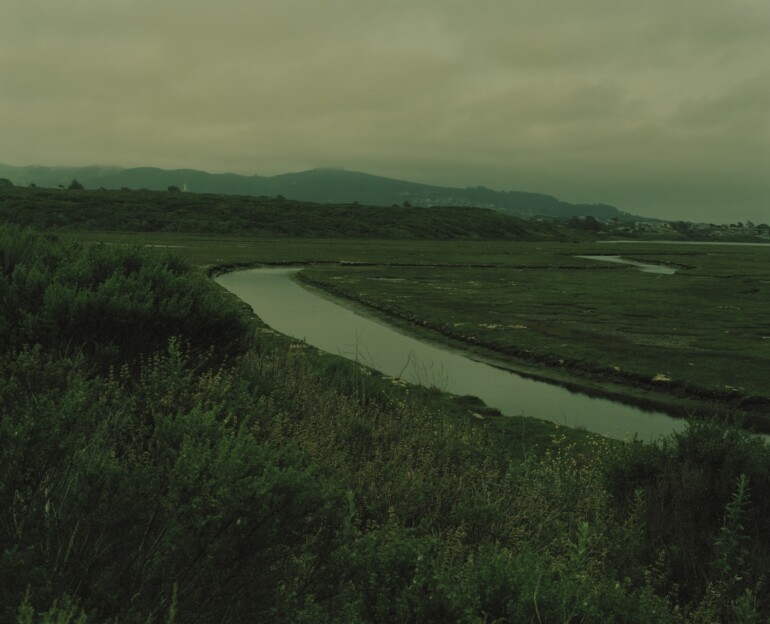
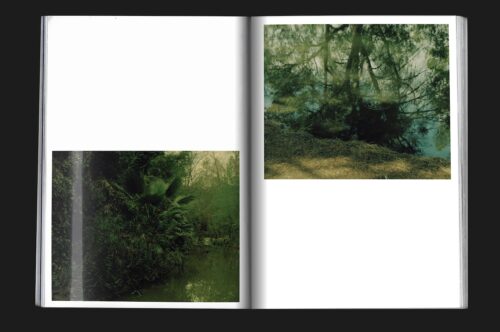
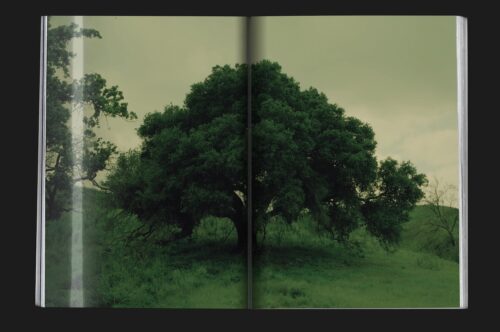
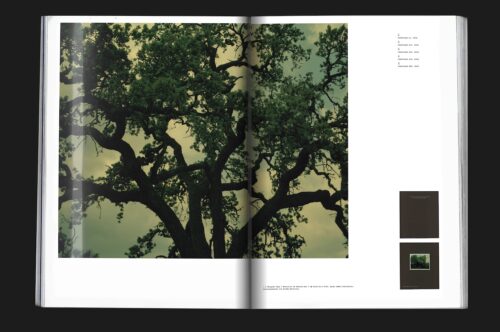
In seiner ersten Monografie »I Thought That I Would Be in Heaven But I Am Only Up a Tree« erkundet Fotograf Ryan James Caruthers die Landschaft als queeren Erfahrungsraum, in dem sich persönliche Identität in den unendlichen Existenzmöglichkeiten der Natur auflöst und entfaltet. In seinen Arbeiten formt Caruthers eine poetisch-melancholische Bildwelt, die sich als emotional aufgeladener Resonanzkörper verdichtet.
Chapter You’ve described nature as a place of refuge during your childhood—a space where queerness could exist without constraint. How did you approach translating that felt sense of freedom into the language of photography, where identity in your images seems to dissolve into landscape?
Ryan James Caruthers When I first started making these images, I wasn’t sure of the exact path or the reasoning, it was more a sense of exploration, going out into the landscape to create without the idea of what exactly I was looking to find—if anything. It probably wasn’t until halfway into my project that it started to click. I realized that the work was resonating at a level that felt almost intrinsic, as if the images were part of me. I think a lot of the reasoning comes after, but the deep hues and painterly quality of the images likely come from my memory of how I encountered these places as a child, or how I felt this grand sense of awe—these encapsulated scenes of verdancy.
Chapter In his essay for the book, writer and poet Ocean Vuong suggests that your work transforms the landscape into a space of boyish mysticism and queer possibility. His words seem to move through your images as much as your images move through his language. What did you recognize in his writing that felt deeply connected to your own way of seeing?
Ryan James Caruthers Ocean is, without doubt, one of the greats. The theme of otherness is woven through much of his work, and it’s something that deeply resonated with me—and, of course, is connected to the nature of the project. I think being queer, being an outsider—this is how most of us felt growing up, that we were looking for a sense of serenity or safety in a world that maybe didn’t yet understand us. I am grateful that he was able to articulate my images into words; his understanding is so deep and profound.
Chapter You’ve spoken of Caspar David Friedrich’s »The Monk by the Sea« as an influence—a figure surrendering to something vast and unknowable. What does surrender mean to you—personally and/or as an artist?
Ryan James Caruthers »The Monk by the Sea« wasn’t an immediate reference from the beginning, but it crept up on me sometime throughout the project. I had seen the painting in a book years before, and it must have been living somewhere in my consciousness. There is surrender in allowing yourself to be completely vulnerable and to create at a level that is deeply connected to your roots and consciousness. I’m not too sure if there is separation between the art and the person—to me, they’re quite interlinked. The surrender is what makes us human.
Chapter What do you find yourself returning to when you need to feel inspired?
Ryan James Caruthers There are a few: I’m an avid collector of books—photography, art, interiors—which provide constant inspiration. Listening to others talk about their own paths and the way they move through the world. I always go back to Nina Simone’s rendition of »Wild Is the Wind«—her words, her pauses, the sweeping sound of the piano. It all feels so resonant—the mourning, the longing, the act of crying out to someone or something that is no longer there but still holds so much space in you. Nothing can beat it.
ERSTMALS VERÖFFENTLICHT IN CHAPTER №XIII »IDENTITY« – WINTER 2025/26