

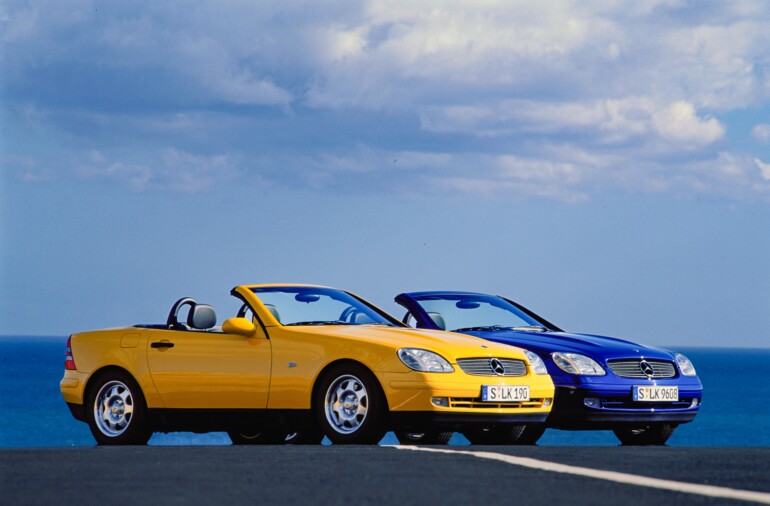
The automobile may have been developed for transportation, but in the roadster little of that practicality remains. In these light, sporty two-seaters, it is not the destination that matters, but the pleasure of driving itself. Typical design features include a long hood, a strikingly short rear end, and a passenger compartment set far back. With the arrival of spring, this body style also returns more prominently to view. In a two-part series, Chapter presents the roadsters that have left the strongest mark on automotive history.
Mazda MX-5
By the late 1980s, small, affordable roadsters were scarce—especially in Europe. That changed overnight when the first Mazda MX-5 was unveiled on February 10, 1989 at the Chicago Auto Show, breathing new life into a long-neglected segment. The idea for the iconic roadster emerged during an interview the American automotive journalist Bob Hall conducted in 1979 with Mazda’s then head of development, Kenichi Yamamoto. Just before the end of the interview, Yamamoto asked Hall whether there was a vehicle he felt was missing from Mazda’s lineup. The journalist replied that he wanted an affordable roadster in the tradition of British sports cars. No one could have foreseen at the time that it would become the most successful roadster of all time.
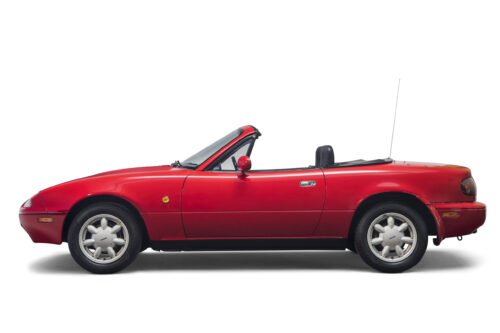
Mazda MX-5 — first generation
Ever since, the MX-5—now in its fourth generation—has stood above all for driving fun. In fact, the roadster doesn’t just follow Mazda’s established ideal of »Jinba Ittai«—the harmonious unity between horse and rider—it takes it to the extreme. Driving a Mazda MX-5 feels like putting the car on. Nothing disrupts the connection between driver and car, and the signature soundtrack is the »click, click, click« of the more-than-direct gearshift that’s typical of the lightweight roadster. As for the question of convertible or coupé—heaven forbid.
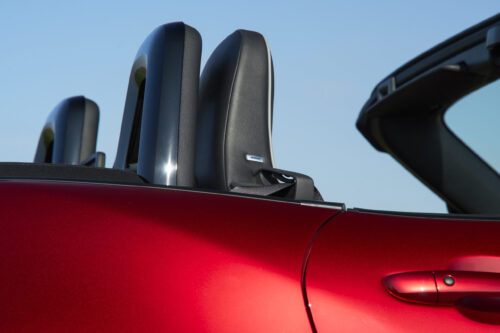
Mazda MX-5, current model generation, 2025
Mercedes-Benz SLK
In April 1996, the Mercedes-Benz SLK was presented to the public for the first time at the Turin Motor Show. Two years earlier, designers Bruno Sacco and Peter Pfeiffer had already caused a stir with their SLK concept. Like the Mazda MX-5, the two-seater from Stuttgart stands for freedom and driving fun. What’s more, the compact vehicle was also a technical pioneer: with its folding steel roof as an alternative to the classic fabric top, Mercedes-Benz managed to combine coupé and convertible in one car.
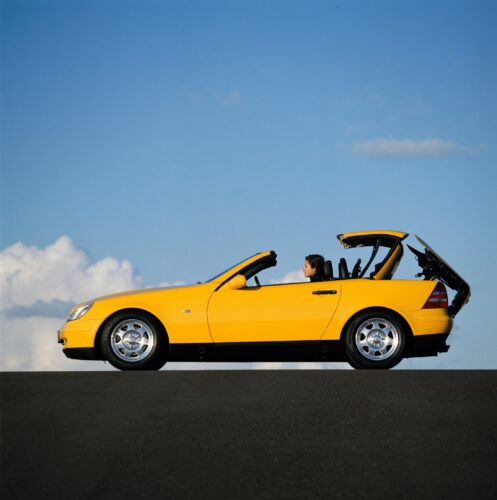
Mercedes-Benz SLK 200, R 170 series, in »yellowstone«
With this new technology and the surprisingly spacious cabin, the manufacturer also found a way to cleverly combine sportiness and comfort. The roadster got its name during the development phase, when engineers—referencing the much larger Mercedes-Benz SL—called it »SL kurz« (short SL). In January 2004, the second generation of the SLK was introduced. Like its predecessor, it embodied the blend of compactness and sporty driving fun, but featured a new front design reminiscent of the super sports car SLR McLaren. In 2016, the compact roadster was renamed SLC and integrated into the C-Class family. In 2019, the era of the zippy roadster finally came to an end.
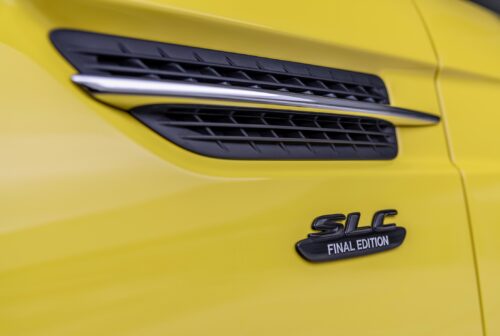
Design detail: Mercedes-Benz SLC 300 »Final Edition«
BMW Z3
With the Z3, BMW entered the race for the best roadster of all time in fall 1995—and had prominent support: in the James Bond classic »GoldenEye«, the two-seater served as 007’s company car. The design of the Z3 was based on three different proposals, with the concept featuring an especially long hood and a strikingly short rear end ultimately prevailing. With its side gills, the sporty roadster also referenced the legendary, highly limited BMW 507. In addition, the Z3—the last one rolled off the line in 2002—featured a flowing, low beltline with strongly emphasized wheel arches. With its sport-tuned suspension, low center of gravity, and direct steering, the roadster also proved a guarantee of limitless driving fun. In 1998, the coupé was introduced, recalling the BMW 328 Sportcoupé from the 1930s. In 1999, the Z3 received a facelift, with slight changes to the rear and front.
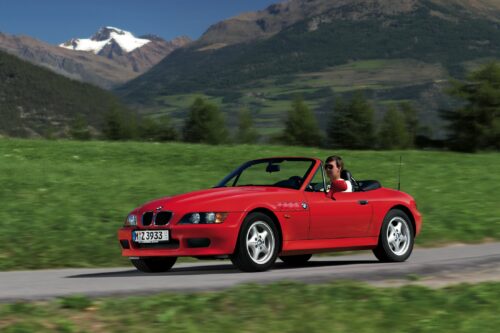
BMW Z3, production period 1995–2002
The Z3 wasn’t the only model in the series to appear in a James Bond film, by the way. The equally iconic Z8, built from 1999 to 2003, also had an approximately 15-minute appearance as the vehicle of the famous British secret agent. The Z8 was designed by Henrik Fisker, who likewise took inspiration from the roadster legend 507.
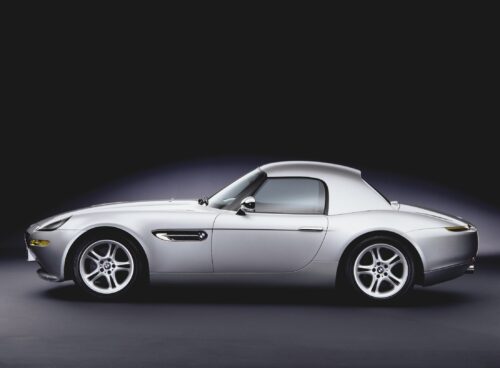
BMW Z8 Roadster, 2000
Toyota MR2
The first Toyota MR2 from 1984 was the result of a design project from 1976 and an attempt to build a car that was fuel-efficient and, at the same time, a real bundle of fun. Among other inspirations, it drew on the Toyota Sports 800, first introduced in 1962. With its compact, practical body, nimble and athletic handling, strong engine, and optional T-bar roof, the MR2 also presented itself as a car where the joy of driving took center stage.
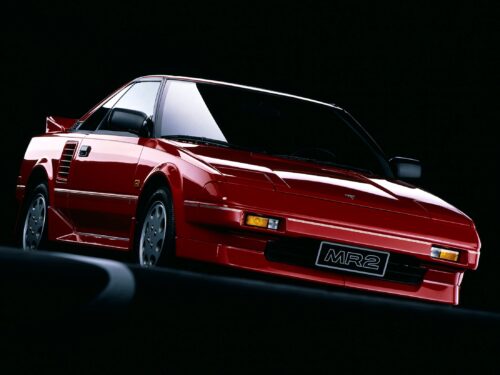
Toyota MR 2, W10 series
The MR2 was also the first mass-produced Japanese car with a mid-engine layout. Five years later, the second generation rolled off the line, with the Japanese manufacturer moving away from the angular, somewhat more expressive shape of its predecessor. Toyota did, however, decide to keep the original’s mid-engine configuration, continued to focus on driving fun overall, but brought a bit more comfort into the mix. The third generation was introduced in 1999 and built until 2007. For around two years now, there have been rumors about reintroducing the mid-engine car. With the concept vehicle FT-Se presented at the Japan Mobility Show 2023, speculation about a possible return became more concrete. In addition, at the end of 2025 Toyota had the MR label protected under trademark law in several countries. [SW]