

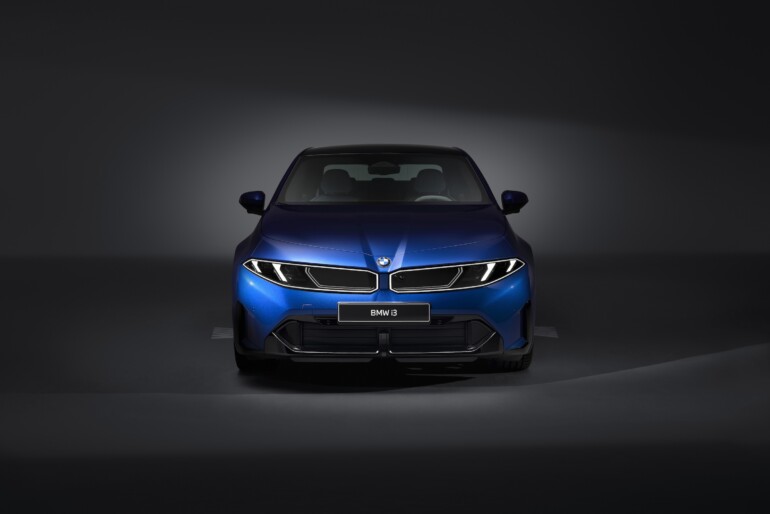
With the debut of the new BMW i3, a model line comes into focus that, more than almost any other, represents the core and identity of the brand. For five decades, the 3 Series has formed the structural backbone of the portfolio, while also serving as a reference point for what BMW understands as driving culture. With the new i3, this lineage is now being carried into the Neue Klasse—as the second model in a generation that BMW positions as a fundamental redefinition of design and technology.
New Era, Neue Klasse
»The Neue Klasse is so modern that it almost looks like we’ve skipped an entire generation«, Adrian van Hooydonk, Head of BMW Group Design, has emphasized repeatedly in recent months. And with the newly unveiled i3 in particular, the design closeness to the progressive Vision Neue Klasse concept—presented in 2023 as the first preview of the brand’s new chapter—is indeed remarkable. The production model adopts many key design principles such as reduced surfaces, clear proportions, and a newly organized front end that brings light and geometry together. As the second model of the Neue Klasse—after the iX3—unveiled in September 2025, the i3 thus embodies a clear technological and design leap, while still remaining firmly rooted in the 3 Series logic.
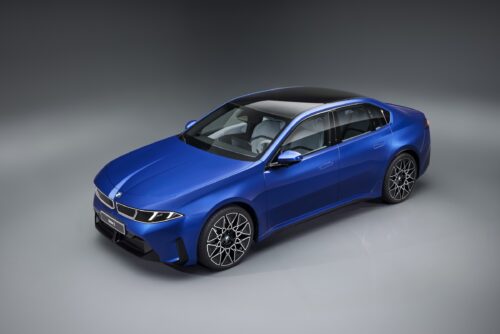
The 3 Series, reimagined
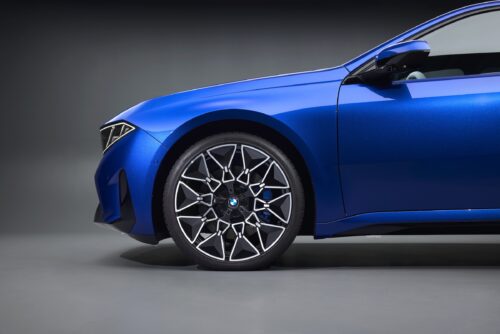
On the exterior, the basic architecture of the 3 Series remains clearly recognizable at first glance. The new BMW i3 continues to follow the familiar proportions with a long wheelbase, short overhangs, and a cabin set further back. What’s new above all is the weighting of the surfaces. The body looks more closed, and transitions between individual elements fade into the background.
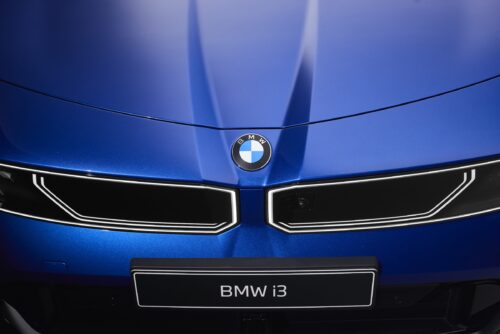
The front end picks up key brand elements, but rearranges them. The kidney grille and twin headlights are no longer designed as separate units, but form a cohesive structure. The four-eye-motif remains, but is defined by a continuous light signature that stretches across almost the entire width of the vehicle.
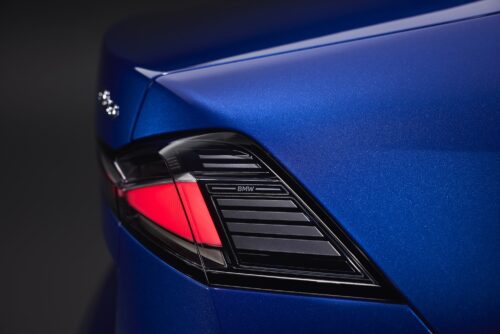
At the rear, this approach continues. The lights are laid out horizontally and integrated far into the body, which further emphasizes the vehicle’s width. Pronounced wheel arches and a clearly structured rear surface stabilize the stance. Inside, the design language (already familiar from the new BMW iX3 ) shifts toward digital layers: displays are projected, physical instruments reduced. The new Panoramic iDrive organizes information and controls along the driver’s line of sight, fundamentally changing the interaction.
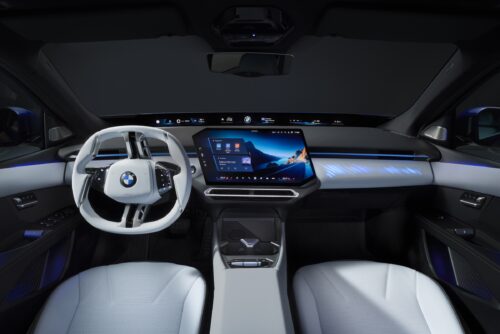
In addition, BMW highlights the technical key figures of the new i3, especially the impressive range of up to 900 kilometers as well as significantly shorter charging times, which are intended to clearly position the model as a long-distance vehicle.
Five decades of the 3 Series—looking back
Back in 1975, the first 3 Series rolled off the production line and proved that driving pleasure doesn’t have to be a privilege of the upper class. The successor to the legendary 02 Series immediately impressed with a blend of compactness, driver focus, agility, dynamism, and smart technology—a formula for success that remains valid to this day.
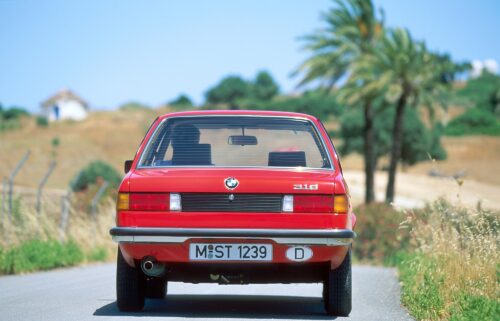
The first 3 Series took on the sporty DNA of the legendary 02 and served it with a slightly larger portion of comfort. Chief designer Paul Bracq opted for clean lines: twin kidney grille, round twin headlights on the more powerful versions or as an option, a coupé-like window line with the Hofmeister kink, and a subtle muscle on the hood. In 1981, the first generation broke the one-million mark, and by 1983 nearly 400,000 more vehicles had been sold.
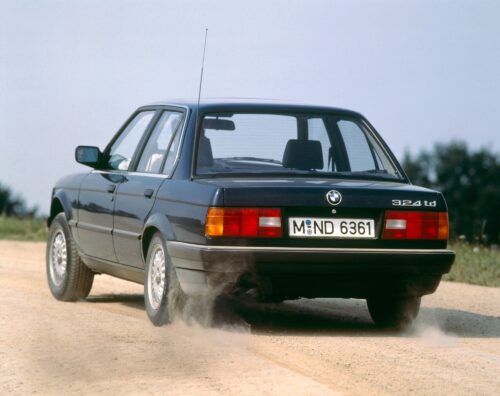
With the second generation, which followed in 1982, the 3 Series model line continued to gain momentum. The cars featured tightened lines, a matte-black B-pillar, standard twin headlights, and a track widened by 35 mm. Both the front and rear axles were revised, ensuring the brand-typical mix of driving pleasure and composure. In 1986, a convertible with an elegant silhouette and a low shoulder line was added. With the Touring, BMW brought even more sportiness to the wagon segment in 1987.
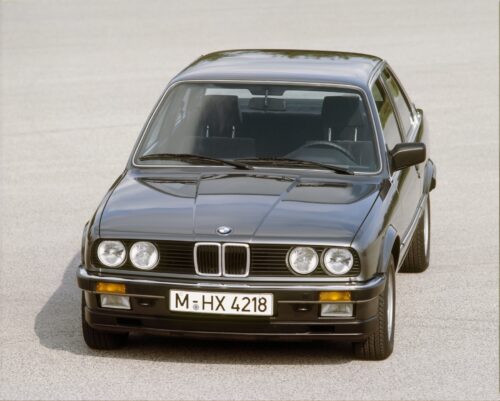
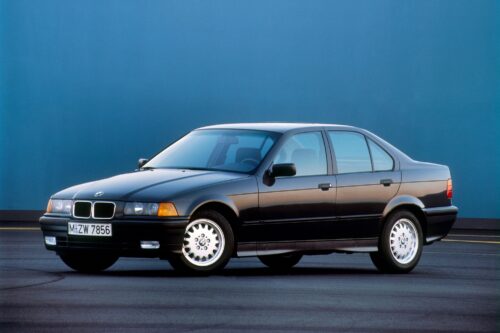
The third generation, available from 1990, scored among other things with more interior space. At the same time, short overhangs and a strikingly low silhouette emphasized the vehicle’s dynamic lines. With the fourth generation introduced in 1998, interior space grew further. On the outside, the model looked sporty and modern, thanks in part to the flowing side line and gently arched roofline.
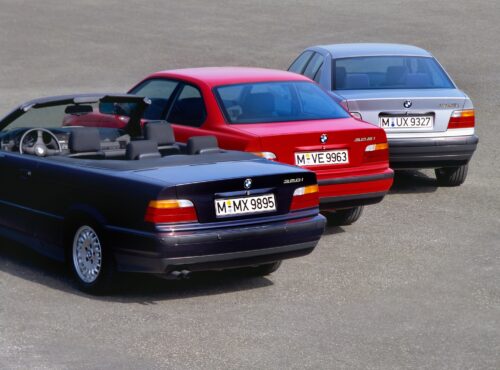
The fifth generation made its debut in 2005 at the Geneva Motor Show: initially as a four-door sedan—the touring followed shortly after, and in 2006 the coupé as well. Otherwise, the focus remained on the proven blend of sportiness and comfort. In the new convertible, the retractable hardtop provided more calm at high speeds. From 2007, the M3 variants of the coupé, convertible, and sedan were also added—for the first time with a V8 engine.
The sixth generation (2012) was longer and wider than the generation before it, while also shedding around 40 kilograms. There was also a new addition to the family: the 3 Series Gran Turismo combined elegant proportions with a higher seating position, a coupé-like roofline, and frameless doors. In October 2018, the curtain finally rose on the seventh-generation BMW 3 Series. From 2019, the slightly longer and wider sedan could then be seen on the road. A long hood, short overhangs, and a flowing roofline continued to convey dynamism and driving fun.
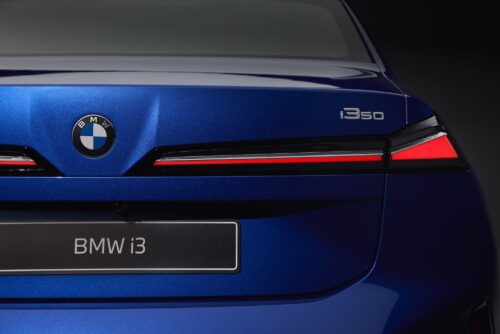
The future meets heritage
The story of the 3 Series is one of continuous evolution. Over the decades, proportions, driving behavior, and design have been repeatedly refined—without ever leaving the model series’ fundamental logic. With the transition into the Neue Klasse, the framework within which this model series evolves is now shifting for the first time. This was preceded by a design process spanning several years, in which BMW used a series of design studies—from Vision Circular and Vision Dee to Vision Neue Klasse—to formulate a consistent picture of its future direction. With the new BMW i3, this new design and technology chapter is now also taking effect within the 3 Series. As the second production model of the Neue Klasse, the new architecture thus reaches the model series that has formed the core of the BMW brand for decades. [SW]