

As a globally operating creative think tank, Designworks occupies a distinctive position within the BMW Group. Founded in California in 1972 and today represented by studios in Los Angeles, Munich, and Shanghai, Designworks works across mobility, product design, digital systems, and experience formats—both for the BMW Group brands and for external clients. Within this international network, the studio in Los Angeles, located in the technology and startup hub »Silicon Beach« in Santa Monica, plays a special role. The team consciously positions itself as a challenger and impulse generator, one that questions established patterns of thought, pushes developments forward and introduces friction where it proves productive. Chapter visited the Designworks studio in Santa Monica to experience this ambition where it must prove itself on a daily basis.
»Great people. Great design. Great fun.« Chuck Pelly declared in 1972, when he turned his garage into a design studio and laid the foundation for »DesignworksUSA«. 54 years later—and as part of the BMW Group since 1995—this motto still feels remarkably current. During Chapter‘s visit to the Designworks Studio in Santa Monica, it becomes evident that the spirit of this early self-conception remains deeply embedded in the studio’s working culture. Progressiveness, creativity, openness, and a genuine enjoyment of the work shape the atmosphere. Between models, sketches, prototypes, and screens, a working environment is lived that is less characterized by hierarchies than by dialogue and, despite all the diversity, always revolves around the same question: How can design be rethought, how can boundaries be shifted, and how can fresh impulses be set beyond short-term trends?
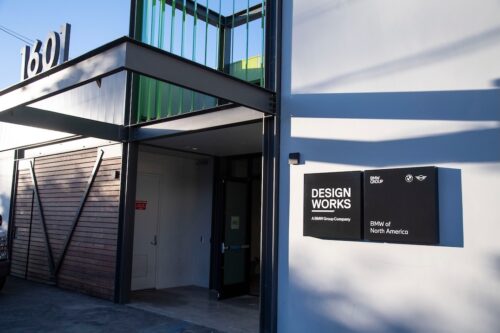
However, all of that sometimes disruptive spirit should not contradict the responsibility within a global corporation. At Designworks L.A., it is not just about completing design tasks, but about testing even unusual ideas, consciously questioning assumptions, and having the courage to allow unconventional things. Especially in this early phase, in which not everything is defined, calculated, or secured, lies the actual value of the studio for the overall system of the BMW Group.
The scope of Designworks L.A.’s work extends far beyond classical automotive projects. Alongside early vehicle concepts, urban mobility scenarios, digital systems, interfaces, spatial applications, and experience formats are created here, often in close collaboration with start-ups, public institutions, or local communities—an aspect that is repeatedly emphasized in our on-site discussions. Topics such as urban development, wayfinding, new mobility services, or AI-supported tools play just as important a role as questions about innovative materials, their manufacturing, and use. The individual result is less decisive than the moment before. Designworks usually works where questions and possibilities are still open and framework conditions have not yet been defined in detail.
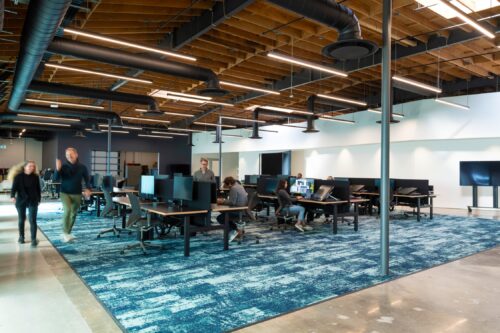
Julia de Bono also describes this role very clearly. After several positions within the BMW design team, she took over the management of Designworks L.A. in 2023. In her function, she moves at the interface between management, strategic orientation, and creative freedom, with the aim of not smoothing out friction, but using it productively. She sees the studio in Santa Monica not as an extended arm of the Munich design center, but as a consciously positioned, sometimes disruptive, source of inspiration within the global design organization of the BMW Group. In conversation with Chapter, Julia de Bono speaks about the special role and ambition of the studio, the influence of American management and corporate culture, and how local radicalism can be translated into a global design language without being softened.
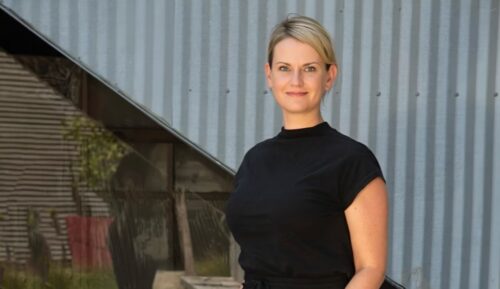
Julia de Bono, CEO/Studio Director Designworks L.A.
Chapter Looking back at your time in Germany and now here in Los Angeles: are there differences in management culture—for example in leadership style or in how teams work together in the U.S.?
Julia de Bono Leadership in the U.S. is definitely different from leadership in Europe. Here it is much more collaborative, very open-house, open-doors. We don’t want to close the doors, but keep them open for people who want to work with us or contribute something. For me personally, there is also the fact that I have a different job here as CEO. This means that I not only deal with design or experiences, but also very specifically with numbers, with structure, with responsibility for the whole—that is a different challenge. And of course, there are those cultural differences in leadership style that I mentioned: there is a lot of communication, a lot of open discussion. In addition, the hierarchies are much flatter, dialogue is central. But perhaps a lot of it is also specific to Designworks. We don’t work in silos, but very comprehensively, very fluidly. That can certainly also be an American background. The approach in the USA is less transactional, but strongly collaborative. Without wanting to judge other leadership styles—it simply works better here. I already see this with the children in school, a lot of emphasis is placed on what you have done well and less on what may have been bad. The view of what has been achieved is simply very different here.
Chapter This constructive, more proactive culture of dealing with mistakes in the U.S. is something Europe is often said to be able to learn from.
Julia de Bono Absolutely. Failure is viewed very positively here. »Failing is great«—it’s almost a badge of honor. The more you have failed, the more experience you bring with you. This is particularly evident in the collaboration with start-ups. From a German perspective, it takes some getting used to seeing that as something positive. And it’s precisely this openness that shapes our work as well. The more we question things, the further we can ultimately leap. This attitude is closely linked to Designworks L.A.’s role—to be, to some extent, disruptive.
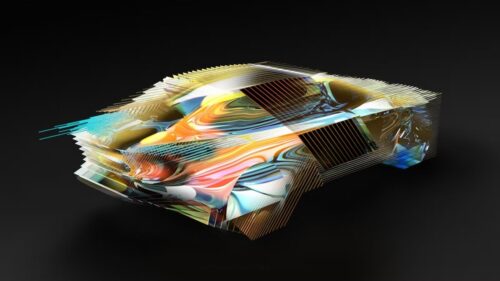
BMW »Dimensions of Real«, immersive Installation, CES 2022 Las Vegas
Chapter In today’s conversations with designers here in the studio, the term »anarchy« even came up at one point. It sounds as though the designers at Designworks L.A. are something like the »punks« within the global Designworks network. Is the work here really the most progressive?
Julia de Bono Yes—because we have to break rules. That’s exactly what’s expected of us. And that’s not a bad position to be in, but you first have to learn how to handle it. The goal is often stated very clearly: I want you to challenge me, to make me uncomfortable. When I take our work to Munich and present it, you can sometimes see how these impulses initially land—and then start to work on the other side.
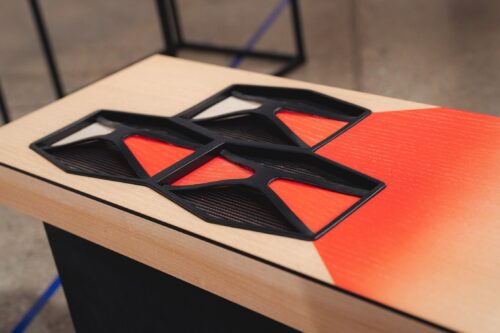
Material study from an ongoing development process at Designworks L.A.
Chapter The individual Designworks studios are also in competition with each other, there are even actual pitch processes—both among themselves and with the in-house design team at BMW. How exactly can you imagine that in practice and where exactly is the boundary between Designworks Studios and the In-House Design Team?
Julia de Bono In the end, there is a design presentation for a vehicle. All the designs from the most diverse studios are on the table, all the sketches are examined—and then the best solution wins. There is often talk about internal competition, and of course we are a design agency, we have to win competitions—but above all against other agencies—and these are also financially important competitions. At the same time, Designworks, as a Creative Lab, specializes in developing new perspectives, rethinking design and pursuing innovative approaches. Our mission is to push boundaries and set fresh impulses that go beyond the ordinary.

BMW M Hybrid V8 design sketch
Chapter The Designworks L.A. Studio in Santa Monica is surrounded by a wide range of other creative studios. How does this environment influence your work?
Julia de Bono It starts with the fact that everyone who walks in wants to make your ideas better. A kind of cumulative process emerges, in which ideas build on each other. This creates an enormous speed. Aesthetically, the entertainment, wellness and lifestyle industries have a major influence. This has always been the case in California, but it is becoming even stronger. In the USA, a very pronounced masculinity can currently be felt in the expression. Products should show presence, profile, strength. This influences materials, shapes, surfaces. In addition, there is the proximity to the aerospace industry, such as SpaceX, and a large start-up ecosystem. New materials, new manufacturing methods, 3D printing—all of this is incorporated. And of course, digitization and AI. The high speed here strongly influences our product development.
Chapter How can such different local influences—both from Designworks L.A. and from the other Designworks studios worldwide—be translated into a global design language that works in all markets? Especially against the background of sometimes strongly diverging aesthetic preferences.
Julia de Bono In theory, that is a challenge, yes. In practice, we mainly develop world cars. There are only a few local models, with the exception of China. In Munich, there is an early phase in which we contribute our inputs. Large teams bundle these perspectives and prepare them for strategic decisions. Then we look at: Where are there overlaps between the markets? Where not? This results in a formal, final statement. This is an iterative process with market research, so-called clinics and feedback loops. At some point, of course, a decision has to be made—and apparently good ones are being made, otherwise we wouldn’t be as successful as we are.
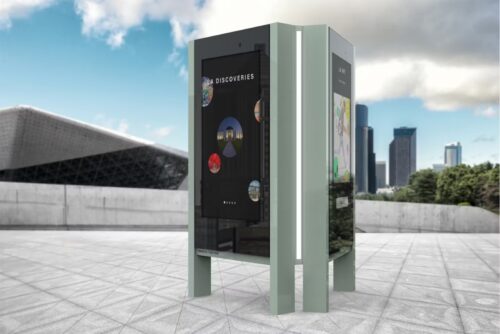
Sidewalk Transit Amenities Program (STAP) for the City of Los Angeles
Chapter Do you share the impression that design is becoming an increasingly important factor in brand identity—and how does that change your work?
Julia de Bono Absolutely. Design experiences are actually becoming more and more important. It’s no longer just about the exterior or dashboard. It’s about how the systems interact: UX, light, sound, haptics. How does something feel? How do you understand the user? Connecting these systems in such a way that they do the right thing at the right moment is challenging. It’s almost an art. If you look at what’s happening in the entertainment sector—for example in the Sphere or in IMAX theaters—then you can see how much people are getting used to immersive experiences. A lot has already been implemented in the vehicle sector in China. An intense, but healthy competition is emerging, which we live very strongly here in the USA.
Chapter Looking at the diverse portfolio of Designworks, are there any projects that you personally find particularly formative?
Julia de Bono For me, the BMW GINA Light Visionary Model was extremely formative. It was radically different, with a strong story. That’s one of my all-time favorites—and one of the reasons why I studied automotive design. And when I look ahead, our AI developments are certainly particularly relevant. We started very early and are providing important input to Munich. It’s less about individual vehicles than about systems and tools that ensure the integrity and recognizability of the brand—today and in the future.

BMW GINA Light Visionary Model
Chapter Is there also a highlight project for an external customer that you would like to highlight?
Julia de Bono We work a lot in the field of urban development. Los Angeles is undergoing a massive transformation, especially in terms of mobility. For example, we are developing wayfinding systems, apps and are working on the ramp-up to the Olympic Games. One example is bus shelters, which we developed together with the communities—with people who depend on public mobility. Such projects open up the view, they lead back to clear, robust solutions. But to be honest, it’s hard to pick out a single project. The variety is what’s interesting about Designworks.
Chapter Are there any disciplines in which you would like to get more involved with Designworks L.A. in the future?
Julia de Bono At the moment, I’m particularly interested in everything around robotics. I find AI-based devices for older people or young people particularly exciting. We have a generation that suffers from permanent sensory overload. I think technologies that help to stay calm or provide orientation—for example in the case of dementia—are very important to me. We also work a lot with students from disadvantaged communities. As a large company, we have a responsibility to give something back. That’s taken for granted here—and it’s particularly important to me personally. [CPS]
