

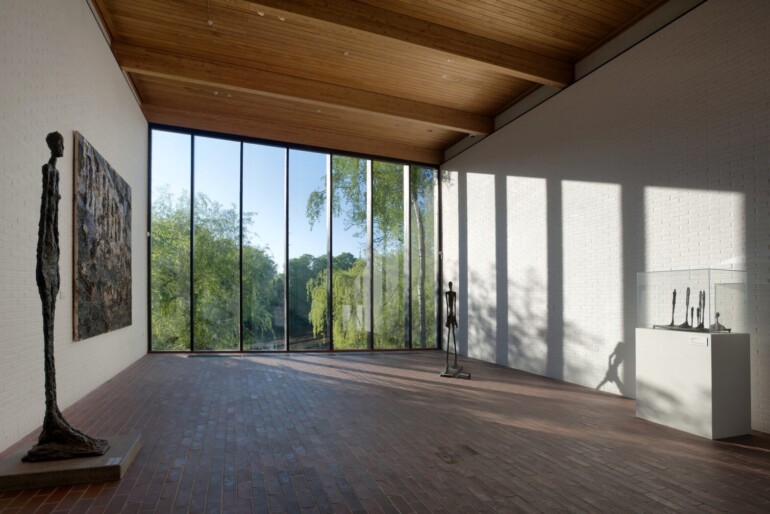
The Louisiana Museum of Modern Art in Humlebæk, north of Copenhagen, is one of the most important institutions for modern and contemporary art in Northern Europe. The architectural design comes from the Danish architects Jørgen Bo and Vilhelm Wohlert, who developed the building from 1958 onwards and expanded it over decades. Their functionally well-conceived concept forms the basis for an architecturally coherent environment for art presentation.
The architecture of the Louisiana Museum of Modern Art follows the principles of Danish modernism of the 1950s and 60s: reduced forms, natural materials, and clear proportions. While classic white-cube architectures usually exclude views to the outside, in Louisiana, generous window areas open up to the park and the Øresund, making daylight a central design element.
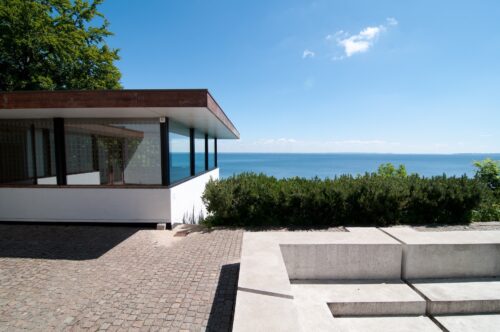
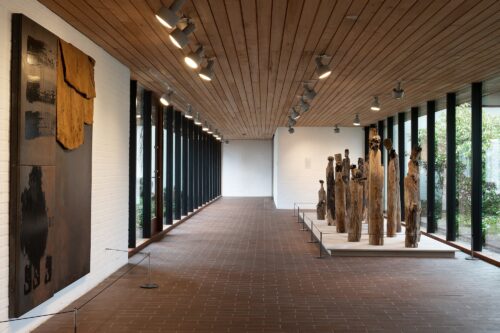
The neutrally designed spaces provide a functional framework for the exhibitions, while the architectural basic concept, expanded over decades, retains its original form, connecting buildings, nature, and art into a clearly structured whole. Pavilions set low into the landscape, connected by glass corridors, create a museum that unfolds linearly yet flexibly, continuously establishing connections between the interior and its surroundings.
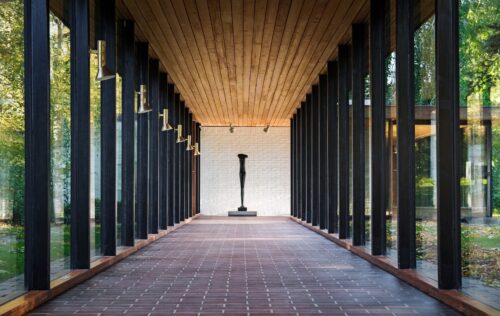
At the heart of the museum is a diverse collection of modern classics that shapes not only the architectural structure but also the museum’s conceptual identity, including works by Alexander Calder, Alberto Giacometti, Henry Moore, and Jean Arp.
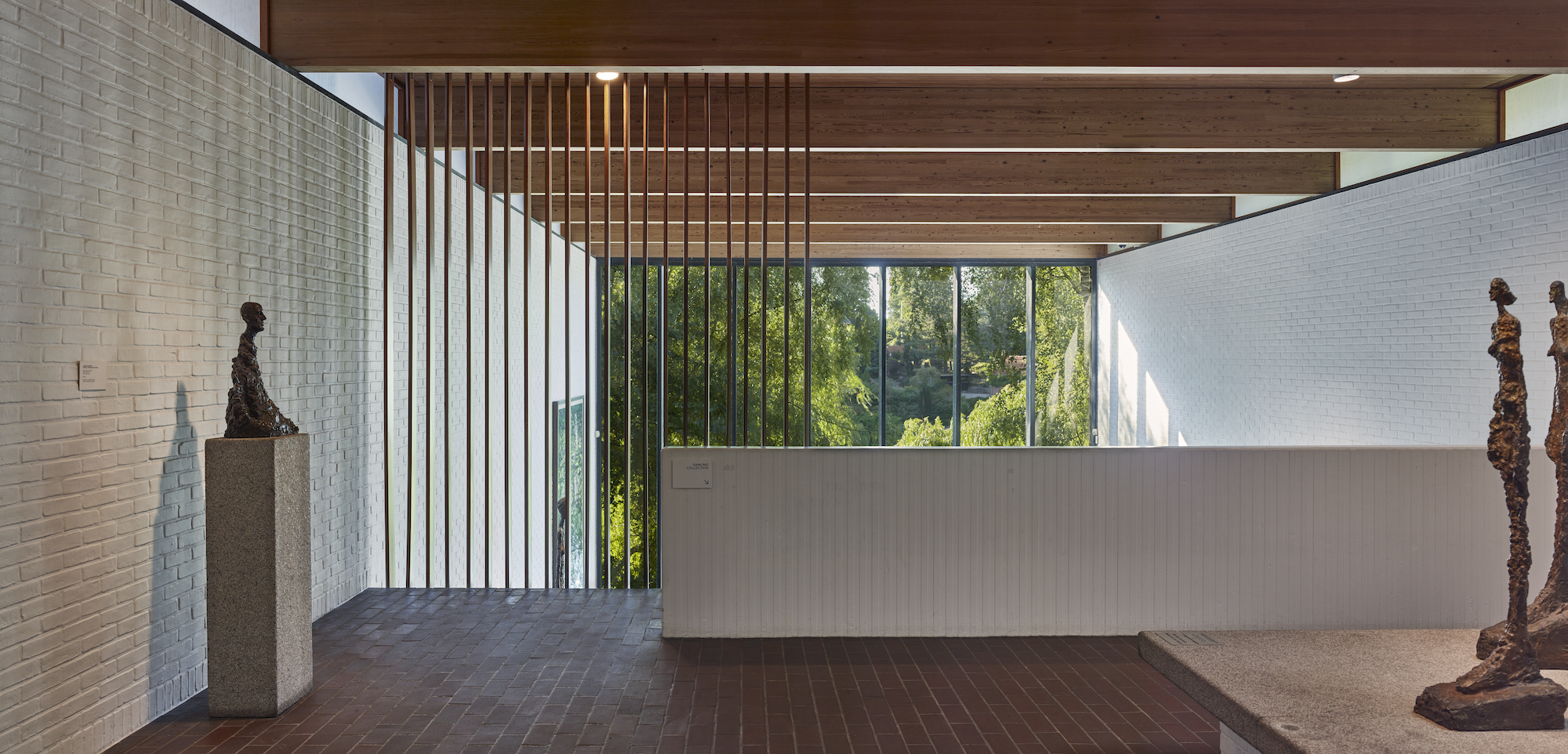
The Giacometti Gallery is one of the museum’s most important spatial reference points: an elongated, deliberately minimalist space specifically created to present Alberto Giacometti’s slender, vertically oriented figures in optimal spatial tension. The bright, almost ascetic architecture—narrow window bands, clear lines, controlled daylight—enhances the effect of the sculptures, whose proportions and surfaces emerge particularly strikingly in the interplay of light and shadow. The deliberate distance between the figures allows for different viewing angles along the axis of the room, making the gallery a place where visitors’ perspective and movement directly influence the perception of the works.
Furthermore, the museum’s collection includes significant works by artists such as Joan Miró, Wassily Kandinsky, Asger Jorn, and Roy Lichtenstein, which are shown in rotating presentations and continuously foster the dialogue between classical modernism and contemporary positions at Louisiana.
At the same time, Louisiana expands its program with major solo exhibitions by international artists, opening new perspectives on current art developments. Exhibitions have included works by Yayoi Kusama, Louise Bourgeois, Pipilotti Rist, Olafur Eliasson, Cindy Sherman, Jenny Holzer, David Hockney, Jeff Wall, Bruce Nauman, and Richard Serra. Installative and expansive works benefit from the open museum structure, which allows for variable presentation forms—for example, Olafur Eliasson’s 2014 exhibition »Riverbed,« in which the museum installed a walkable rock landscape that completely transformed the architectural framework and impressively redefined the relationship between nature, space, and perception.
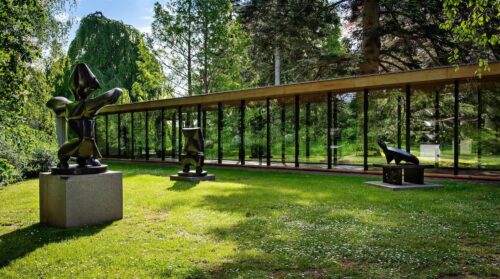
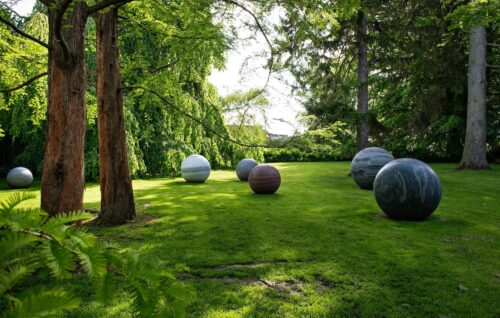
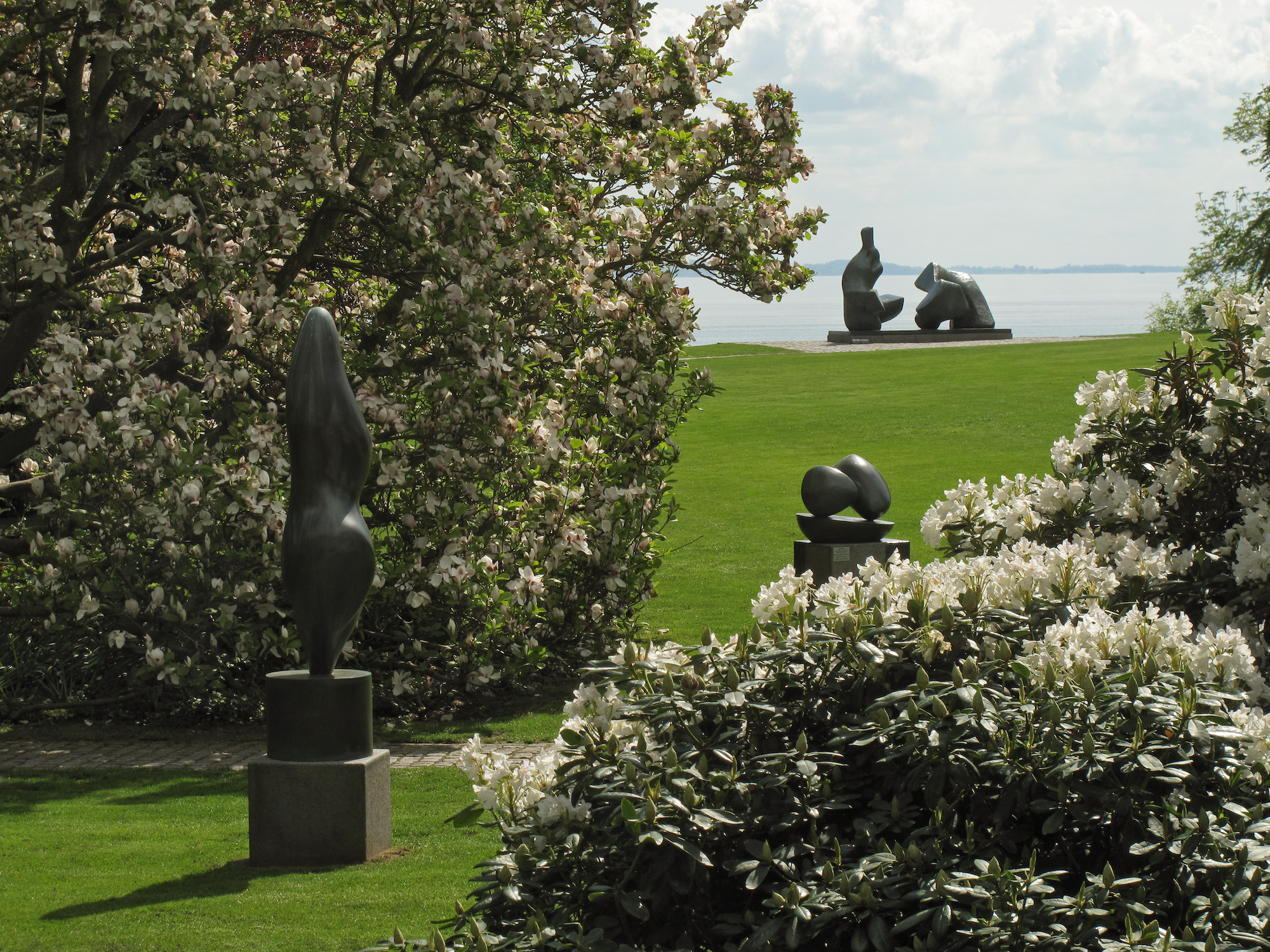
The Sculpture Park adds an important spatial dimension to the museum. Works by Calder, Moore, Lygia Clark, Richard Serra, or Alexander Tovborg are placed on the grounds, forming a direct connection between art and landscape. The positions are deliberately chosen to incorporate both architectural lines and topographical features.
In its curatorial program, the museum, in line with its architectural heritage, intensively addresses questions of design, spatial culture, and architectural history. Thematic insights into Nordic design and building culture are as much a focus as exhibitions on international architectural movements, designers, and urban developments. Projects by Louis Kahn, Zaha Hadid, Renzo Piano, and Tadao Ando, among others, have been presented, expanding the museum’s scope with relevant positions in global architecture.
For almost 70 years, the Louisiana Museum of Modern Art has demonstrated how naturally architecture, landscape, and curatorial practice can intertwine. This is precisely where the enduring quality of this place lies: in the consistent evolution of a framework tied to its location and culture, which presents international artists in a context that is both temporally and spatially precise yet open. [Ed.]